
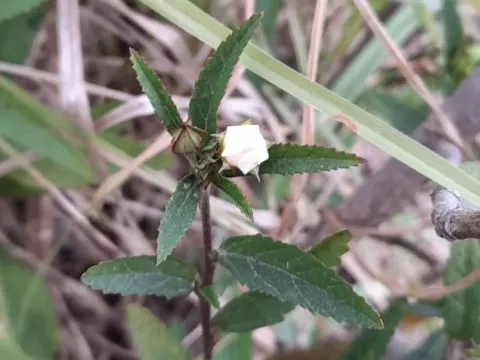
Sida kohautiana
Sida kohautiana
Sida kohautiana belongs to the Malvaceae family and demonstrates rapid growth in tropical climates when sown at the beginning of the rainy season. The optimal time for planting is determined by the soil moisture levels, which ensure uniform germination and robust development of the root system.
What the section contains
Sida kohautiana
This crop requires the stable temperature conditions characteristic of subtropical and tropical regions, making sowing dates strictly dependent on local climate cycles. For agronomic purposes, seeds are sown in rows to ensure sufficient plant density for the formation of erect, unbranched stems.
To ensure high fiber quality, the crop is grown in well-lit areas, as it is a light-demanding plant. Maintaining an optimal seeding rate prevents excessive stem branching, which positively impacts the quality of the resulting technical raw material.
Pre-sowing soil preparation involves standard methods such as plowing and harrowing to create a fine-grained structure. It is essential to ensure the absence of weeds during the early stages of vegetation, as young plants have a relatively slow growth rate in the first few weeks.
Crop rotation plays a key role in cultivating this species, helping to reduce the accumulation of specific soil-borne pathogens. Grain crops are considered the best precursors, as they contribute to the restoration of soil structure.
Sida kohautiana is a typical representative of the African flora, adapted to hot climate conditions. The plant prefers well-drained, fertile soils capable of retaining moisture without the risk of waterlogging, which is critical for the development of its taproot system.
A key factor for successful cultivation is the availability of sufficient rainfall during the active growth period. Despite the relative drought tolerance of mature specimens, moisture deficiency during the flowering phase can significantly reduce biomass accumulation and fiber quality.
The plant thrives in soils with a neutral or slightly acidic pH, characteristic of most tropical savannas. The optimal pH range is between 6.0 and 7.5, which ensures the bioavailability of essential microelements for the plant's full development.
Temperature must be maintained within the 25–30 degrees Celsius range, as sudden cold snaps can slow metabolic processes and lead to growth stasis. Under intense sunlight, the crop maximizes its biological potential.
Agronomic management requires the application of moderate doses of nitrogen fertilizers during initial stages, which stimulates active vegetative mass development. Organic fertilizers improve the physical properties of the soil, enhancing the overall productivity of the agro-ecosystem.
The biomass yield of Sida kohautiana directly depends on soil fertility and the level of agronomic care. Under favorable conditions, green mass yield can reach significant levels, ensuring a high output of bast fiber per hectare.
The primary performance indicator for cultivation is the yield of high-quality fiber, which is determined by the harvest phase. Harvesting during the flowering period yields the most durable and elastic raw material, suitable for various industrial applications.
Under intensive cultivation methods, yields can be increased through supplementary irrigation during dry periods. An important factor is planting density, which determines the number of stems per unit area.
The yield potential of the crop also correlates with varietal characteristics, provided that selection works are conducted to identify forms with the longest, straightest stems. Stability of the crop is ensured by protection against critical environmental factors.
The economic efficiency of producing this crop is evaluated based on the total costs of processing the raw material after harvest. The high cellulose content makes the plant a promising source for the production of sustainable biomaterials.
Sida kohautiana is susceptible to a number of pests typical of the Malvaceae family, including leaf-eating insects and certain types of nematodes. Timely monitoring of the crop allows for minimizing losses caused by pest infestations.
Among diseases, fungal infections such as powdery mildew or leaf spots are most common, particularly in high-humidity conditions. Proper ventilation of the fields acts as an effective preventive measure against these issues.
Root rots may occur due to water stagnation in heavy soils, emphasizing the importance of site selection. It is recommended to maintain spatial isolation from other Malvaceae plants to prevent the cross-spread of infections.
Pests often target young shoots, which can lead to stem deformation and reduced fiber quality. The use of integrated pest management systems, combining biological and chemical methods, is most justified in industrial-scale production.
The agronomist should conduct regular phytosanitary inspections to detect disease clusters at an early stage. Timely removal of affected plants prevents the spread of fungal spores across the field.
The harvest of Sida kohautiana is primarily conducted during the mass flowering phase, when the fiber content in the stems reaches its biological maximum. In this period, the stem retains sufficient flexibility, which facilitates subsequent processing steps.
Mechanized harvesting involves cutting the stems close to the soil surface to maximize fiber length. The cut stems must be immediately transported for primary processing to avoid quality loss due to excessive drying.
The harvesting technology often includes a maceration or retting stage to separate the fiber from the woody core. In traditional settings, this is done in water bodies or through controlled field-based fermentation processes.
Proper drying of the raw material after fiber separation prevents mold growth and preserves the material's physical and mechanical properties. The finished fiber requires storage in dry, well-ventilated rooms to maintain its market appearance.
Harvesting requires caution, as the stems contain tough fibers capable of damaging the cutting parts of poorly maintained equipment. Regular sharpening of mower blades and proper equipment settings guarantee the efficiency of harvesting operations.