
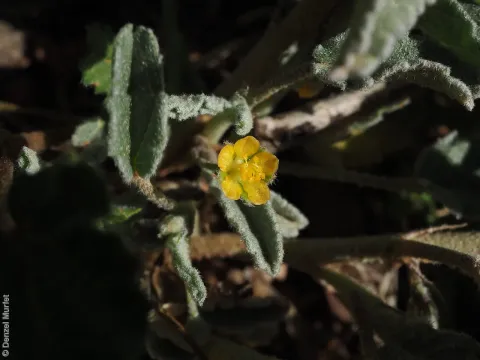
Sida fibulifera
Sida fibulifera
Sida fibulifera is a resilient herbaceous plant belonging to the Malvaceae family. Native to arid regions, primarily in Australia, it has developed significant adaptations to survive in environments characterized by limited rainfall and high solar radiation.
What the section contains
Sida fibulifera
The plant exhibits a robust root system, which is crucial for nutrient and water uptake in sandy and clay-loam soils. Its structural integrity is supported by stems that are often hirsute, providing a protective barrier against extreme temperatures.
This crop thrives in well-drained soils and requires full sun exposure to reach its maximum productivity. It is known to maintain growth during prolonged dry spells, making it a subject of interest for sustainable agricultural research in arid climates.
Morphologically, Sida fibulifera possesses serrated leaves typical of the Malvaceae genus, facilitating efficient transpiration control. The plant's architecture allows for optimal airflow, which is essential for maintaining health in dense stands.
In terms of ecological adaptation, the species is capable of colonizing disturbed areas, which highlights its hardiness. Understanding its specific soil requirements, such as pH levels and nutrient profile, is essential for its potential integration into crop rotation systems.
Sida fibulifera can be susceptible to common pests affecting the Malvaceae family, including aphids and whiteflies. These insects primarily target the younger, succulent foliage, extracting sap and weakening the plant's vascular integrity.
Fungal infections, particularly powdery mildew and various types of leaf rust, pose a significant threat under high humidity conditions. These diseases can cause severe defoliation, leading to a marked decrease in photosynthetic capacity.
Root rot pathogens are a major concern in fields with poor drainage. Once established, these fungi are difficult to manage, making preventative irrigation and soil management the primary tools for control in agricultural settings.
Integrated Pest Management (IPM) strategies are recommended to maintain the crop's health. This includes regular field scouting to identify early signs of insect infestation or disease outbreaks, allowing for timely intervention with appropriate control measures.
Furthermore, maintaining soil fertility and reducing competition from weeds during the establishment phase is vital for plant vigor. Strong plants are better equipped to withstand environmental stress and associated pest attacks throughout the growing season.