
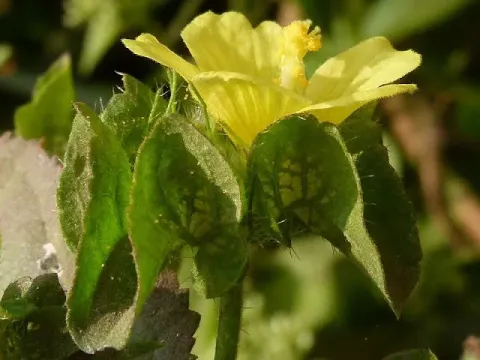
Sida glutinosa
Sida glutinosa
Sowing of Sida glutinosa should be performed in the spring once the soil at seed depth warms up to 12–15 degrees Celsius. Ensuring optimal contact between seeds and moist soil is crucial, as the small seeds are sensitive to desiccation in the upper soil layer.
What the section contains
Sida glutinosa
The optimal sowing depth is between 1 and 2 centimeters. Excessively deep sowing can lead to delayed emergence and weakened young seedlings, which reduces their competitiveness against weeds during the critical early growth phase.
When using row seeding, row spacing should be set between 30 and 45 centimeters to facilitate mechanical weed control and care. Dense stands are often preferred for maximizing vegetative biomass, though density must be monitored to ensure individual plant health.
In regions with prolonged springs, sowing can be staggered to minimize the risks of late frost damage. Pre-sowing treatment, such as brief stratification or scarification, may be used to improve germination rates in challenging conditions.
Following sowing, it is recommended to roll the field lightly to improve capillary water rise to the seedbed. This practice promotes uniform germination, which is the cornerstone for establishing a productive and consistent stand.
Sida glutinosa is a thermophilic crop that requires a significant number of growing degree days for full seed maturation and biomass accumulation. It thrives in sunny, open locations that are protected from strong, drying winds.
The plant prefers loose, fertile loam or sandy loam soils with a neutral to slightly acidic pH. Waterlogging and high soil acidity are detrimental to the development of the plant's root system and overall vigor.
While the crop possesses moderate drought tolerance, it requires adequate moisture during the first half of the growing season to achieve high yields of green matter. Critical water stress significantly stunts stem elongation.
As a member of the Malvaceae family, Sida requires sufficient nitrogen availability during the early stages of development. Applying organic amendments before planting significantly enhances the productivity of the stands.
Managing weed competition is essential for success, as Sida glutinosa exhibits slow initial growth. Mechanical inter-row cultivation is a mandatory agronomic operation to ensure the crop establishes dominance over opportunistic weeds.
Yields of Sida glutinosa biomass vary significantly based on soil fertility and regional climatic conditions. Under intensive management with proper fertilization, biomass production can reach substantial levels per hectare.
The primary commercial interest lies in the stem fiber, which is harvested before the stems become overly lignified. Harvesting at the peak of the vegetative phase ensures the best quality of raw material for industrial processing.
Seed production potential is best realized under long-day conditions with adequate precipitation during the flowering stage. Consistent seed yield requires strict adherence to soil moisture management practices throughout the reproductive period.
When harvesting for industrial raw material, the output of dry matter is the primary metric, which depends directly on the timing of the cut. Early harvesting cycles generally provide higher quality fiber suitable for specialized manufacturing.
Average yield figures suggest this crop is a promising source of renewable plant-based raw materials. Optimizing mineral nutrition and applying micronutrients can increase marketable output by 15–20% in well-managed systems.
The greatest threat to the crop comes from leaf-eating insects, particularly during the early formation of young foliage. Monitoring for pest populations allows for timely interventions that prevent widespread damage to the young stand.
In conditions of high humidity and poor air circulation, the crop is susceptible to fungal diseases affecting the stem base and roots. Implementing a sound crop rotation plan is the primary method for controlling soil-borne pathogens.
Powdery mildew may affect Sida leaves in the second half of the summer, especially during periods of volatile temperature fluctuations. This disease leads to premature leaf yellowing and shedding, reducing photosynthetic capacity.
Spider mites represent a specific risk during hot, dry weather conditions, as they rapidly colonize the plant. They extract cell sap, causing leaf deformation and overall reduction in plant vitality and biomass growth.
For threat mitigation, an integrated pest management (IPM) approach is recommended, combining preventive cultural practices, biological control agents, and the use of selective insecticides only when economic thresholds are exceeded.
Harvesting for green biomass is conducted during the mass flowering stage, when the plant has maximized the accumulation of nutrients. This window provides the best balance between biomass quantity and the quality of the stems.
Standard mowing equipment is utilized, set to a stubble height of 10–12 centimeters from the soil surface. This height facilitates rapid regrowth for subsequent cuts, provided the local climate and technology support multi-cut systems.
After mowing, the biomass is left in the swath for preliminary wilting, which reduces moisture content for transport while preserving valuable chemical components. Over-drying should be avoided to maintain the structural integrity of the fiber.
Seed harvesting occurs when the capsules begin to turn brown, requiring careful timing to prevent shattering and seed loss. Combine settings should be adjusted for low drum speeds to minimize mechanical damage to the seeds.
Post-harvest processing includes thorough cleaning of debris and drying seeds to a moisture content of 12–14%. Properly dried seeds can be stored for several years in cool, dry conditions without significant loss of viability.