
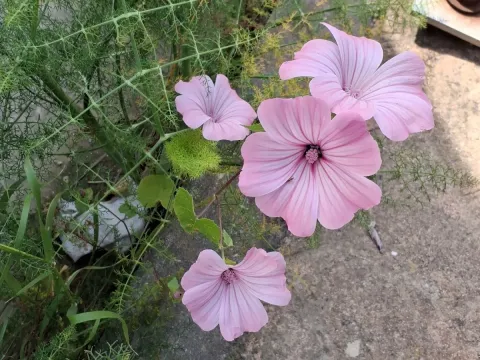
Annual mallow
Malva trimestris
Malva trimestris, commonly known as annual mallow, is a fast-growing plant from the Malvaceae family. It is best propagated by sowing seeds directly into the garden soil once the danger of frost has passed in late spring.
What the section contains
Annual mallow
The seeds should be planted at a depth of 1 to 2 centimeters. Optimal soil temperature for germination is between 15°C and 20°C, which ensures a uniform and healthy emergence of seedlings within two weeks.
Thinning is an essential part of the sowing process. Once the seedlings reach a few centimeters in height, they should be spaced at least 30 centimeters apart to allow for proper air circulation and plant development.
Because the plant develops a deep taproot, it does not transplant well. Sowing seeds in their permanent location is highly recommended over the container-grown transplanting method.
Successional sowing can be employed throughout the spring to extend the flowering window well into the late summer. This technique ensures a continuous display of blooms throughout the season.
Annual mallow thrives in full sun exposure. While it can tolerate partial shade, the most vigorous growth and the largest number of flowers are achieved when the plant receives at least six hours of direct sunlight.
The ideal soil for this crop is fertile, light, and well-drained. It does not perform well in heavy or waterlogged soils, as these conditions increase the risk of root rot and stunted plant growth.
Watering should be managed carefully; while the plant is somewhat drought-tolerant once established, it benefits from consistent moisture during the blooming period to maintain flower size and color intensity.
Nutrient requirements are moderate. A balanced liquid fertilizer applied every few weeks during the summer will encourage continuous flower production without promoting excessive vegetative growth.
The plant adapts well to a variety of garden environments, including beds and borders. Its ability to thrive in different climates makes it a versatile choice for many gardeners worldwide.
Rust is the most common fungal disease affecting Malva trimestris. It manifests as characteristic orange or brown pustules on the undersides of the leaves and requires prompt fungicide treatment.
Powdery mildew may occur during periods of high humidity and poor ventilation. Keeping the plants properly spaced and ensuring dry foliage helps to minimize the occurrence of this fungal pathogen.
Aphids are the primary insect pests that feed on the succulent tissues of new growth and flower buds. They can be controlled through natural predators or targeted applications of mild insecticidal soaps.
Spider mites can become a problem in hot, dry conditions. They are often identified by the presence of fine webbing and a stippled appearance on the leaves, which can be managed with miticides.
Good garden hygiene, such as removing debris and dead foliage at the end of the season, is the best preventative measure against the overwintering of pests and pathogens in the soil.