
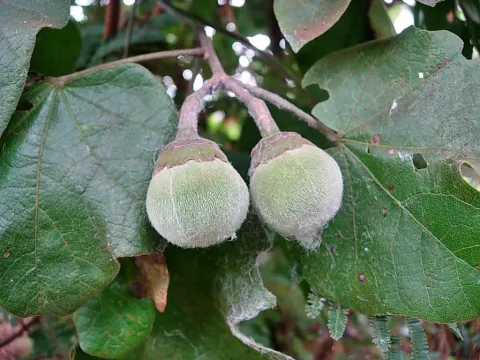
Azanza
Azanza
Azanza is a genus of tropical trees and shrubs belonging to the Malvaceae family. Native primarily to the African continent and certain parts of Asia, these plants are highly resilient and well-adapted to the challenging conditions of tropical savannas and semi-arid landscapes.
What the section contains

Azanza
The plant demonstrates remarkable drought tolerance, thriving in regions with irregular rainfall patterns. This hardiness makes Azanza an important species for reforestation efforts and sustainable land management in arid tropical zones.
Azanza requires well-drained soil types, such as sandy loams or porous volcanic soils. Good aeration is critical for root development, as the plant is highly sensitive to waterlogged conditions, which can lead to quick onset of root decay.
Sunlight is the primary driver of growth for Azanza. It requires full solar exposure to flourish; even partial shade can lead to stunted growth and significantly reduced flowering, ultimately impacting the plant's yield potential.
Regarding agricultural practices, young Azanza plants require basic weed control to ensure they establish their root systems effectively. As mature trees, they become quite independent, requiring little intervention beyond occasional pruning for health and shape.
The primary agricultural output of Azanza is its edible fruit. The fruits are rich in nutrients and are commonly consumed fresh or sun-dried by local communities, serving as a reliable food source during the off-season when other crops are unavailable.
The wood of the Azanza tree is dense, durable, and highly prized for its utility in carpentry. It is often crafted into tool handles, small construction beams, and household implements due to its natural resistance to wood-boring insects.
Beyond food and wood, the plant holds value in ethnopharmacology. Extracts from the bark and leaves are utilized in traditional preparations to address various ailments, including respiratory issues and skin inflammations.
The bark of the tree is a source of strong fibers used in the production of ropes, cordage, and woven textiles. This versatility adds value to the tree beyond its primary role as a fruit-bearing plant.
Fruit yields generally increase as the tree reaches maturity. Under favorable environmental conditions, Azanza can provide stable harvests for many years, offering a long-term productive asset to smallholder farming systems.
Azanza is susceptible to several pests common to the Malvaceae family, including various species of aphids and defoliating caterpillars. If left unmanaged, heavy infestations can severely weaken the tree and diminish fruit production.
Fungal infections, such as leaf spot diseases, can occur if the local environment is too humid or if the planting density is too high. Proper canopy management and pruning are essential to improve airflow and reduce humidity levels.
Root rot remains a major threat, particularly in poorly drained soils. Over-irrigation or planting in low-lying areas with poor drainage often creates the anaerobic conditions necessary for fungal pathogens to thrive.
Integrated pest management strategies, utilizing both biological controls and physical interventions, are recommended for large-scale plantings. Maintaining tree vigor through proper site selection is the best preventative strategy.
Regular monitoring of tree health is vital. By removing dead or diseased branches, producers can maintain the structural integrity of the plant and prevent the spread of diseases across the plantation or orchard.