
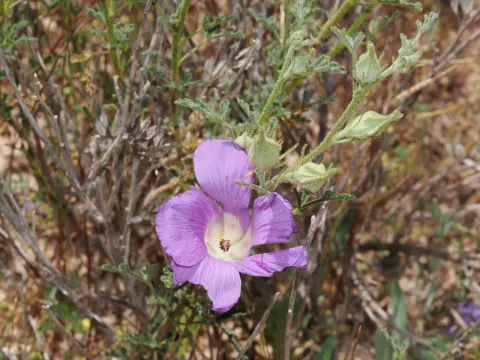
Alyogyne
Alyogyne
Sowing Alyogyne seeds is primarily carried out in the spring period when stable soil and air temperatures of at least 20-22 degrees Celsius are established.
What the section contains


Alyogyne
For successful germination, it is recommended to perform preliminary seed scarification, as the outer coat is quite dense and hinders swelling.
The use of a light, well-drained substrate based on peat and perlite ensures the necessary oxygen flow to the plant's future root system.
During sowing, seeds are buried no deeper than 0.5 centimeters to ensure optimal light access, which stimulates the germination process.
Containers with seedlings should be covered with film until the first shoots appear, with regular ventilation to prevent moisture stagnation and pathogen growth.
Alyogyne is an ornamental perennial shrub belonging to the Malvaceae family, naturally occurring mainly in the arid regions of Australia.
The plant is highly light-demanding and requires placement in well-lit areas protected from strong, cold winds that can damage the delicate foliage.
The crop has high requirements regarding soil drainage: water stagnation near the roots is a critical factor leading to the rapid death of the plant.
The optimal temperature range for active growth is between 18 and 25 degrees Celsius; the culture poorly tolerates freezing temperatures and requires winter protection.
During the active vegetation period, the plant requires moderate watering, although in winter, moisture levels should be minimized to prevent root rot.
The primary danger to Alyogyne consists of fungal diseases of the root system, which arise from soil waterlogging and poor aeration.
Among insect pests, the spider mite and mealybug are the most common, as they reproduce actively in dry air conditions.
To combat spider mites, specialized acaricides are used, while regular misting and proper ventilation are recommended as preventive measures.
Mealybugs require treatment with systemic insecticides because the pest spreads rapidly and can quickly drain the vigor of the ornamental shrub.
Regular inspection of the underside of leaves allows for the early detection of pest colonies and enables intervention before mass infestation occurs.