
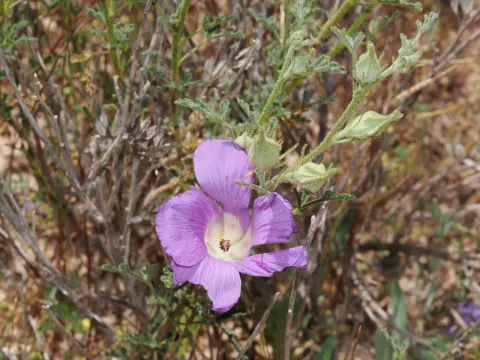
Alyogyne
Alyogyne Alef.
Alyogyne is a genus of flowering plants in the mallow family, Malvaceae, native to Australia. These evergreen shrubs are widely recognized for their large, showy blooms that resemble those of the hibiscus genus, leading to the common name Australian hibiscus.
What the section contains


Alyogyne
The plants are naturally adapted to dry, sunny environments. They feature distinctively lobed or divided leaves and typically grow as woody, upright shrubs that can reach significant sizes if given proper space and environmental conditions.
Cultivation requires full sun exposure to promote dense foliage and abundant flowering. Well-draining, slightly acidic soil is essential, as the roots are highly susceptible to rot when exposed to stagnant water for extended periods.
In terms of climate, Alyogyne is not frost-tolerant. In cooler regions, it must be grown in containers and brought indoors before the first autumn frosts to protect the plant from damage and ensure its survival through the winter.
Watering should be consistent during the active growing season, but the soil surface should be allowed to dry out between waterings. Fertilization with a balanced slow-release fertilizer during spring supports healthy growth and vigorous bloom production.
Root rot is the most significant threat to Alyogyne, usually caused by overwatering or poorly draining soil. If the roots begin to decay, it is often necessary to prune affected areas and repot the plant in fresh, porous substrate.
Pests such as spider mites and mealybugs can infest the plant, especially in indoor conditions where air circulation might be limited and humidity is low. Regular monitoring and washing of leaves help manage these populations.
Aphids are frequent visitors during the spring flush, targeting tender new growth. Using systemic insecticides or insecticidal soaps is effective in keeping the plant clean and preventing the transmission of plant viruses.
Chlorosis, indicated by yellowing leaves with green veins, typically points to a pH imbalance in the soil that prevents nutrient uptake. Adjusting the acidity and adding chelated iron can restore the plant's health.
To prevent fungal diseases like powdery mildew, ensure the plant is placed in a well-ventilated area. Avoid wetting the foliage during evening hours to maintain a dry microclimate around the stems and leaves.