
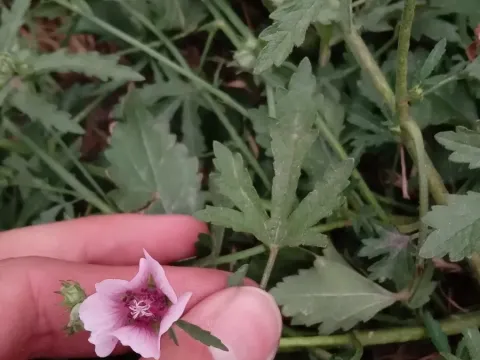
Armenian marshmallow
Althaea armeniaca
Sowing of Armenian marshmallow seeds is typically conducted in early spring as soon as soil temperatures reach approximately 10 degrees Celsius. Late autumn sowing is also a viable practice, allowing seeds to undergo natural stratification, which promotes more uniform germination in the following spring.
What the section contains
Armenian marshmallow
Seeds should be planted at a depth of 1-2 centimeters. Proper soil compaction after sowing ensures the necessary contact between the seeds and moist soil, which is crucial for early and robust seedling emergence. Row spacing is usually kept between 45 and 60 centimeters.
As a member of the Malvaceae family, this species requires a stable environment during its initial growth phase. Since the plant focuses on developing its taproot system during the first year, farmers must ensure the seedling bed is free from competition by unwanted vegetation.
Seeding rates are adjusted based on the soil type and local climatic conditions. After the development of the first few true leaves, thinning is recommended to ensure each individual plant has sufficient space, which is critical for maximizing root diameter in subsequent growing seasons.
Consistent moisture levels in the topsoil are necessary during the germination phase. Farmers should avoid crusting of the soil surface, as this can physically obstruct the delicate sprouts. Using light mulching or careful irrigation can significantly improve initial stand density.
Armenian marshmallow thrives in sunny locations with well-drained, fertile soils. While the plant is quite versatile, it performs best in black earth or loam soils with a neutral or slightly alkaline pH. Waterlogged conditions must be avoided to prevent root diseases.
The plant demonstrates significant drought tolerance due to its deep taproot system, making it suitable for regions with variable rainfall. However, supplemental irrigation during the peak growth months of summer can substantially increase the final harvest weight of the roots.
Temperature requirements are moderate, as the species is adapted to continental climate conditions. Once established, the plants are winter-hardy and can withstand significant frost, provided they are managed correctly with appropriate soil maintenance practices during the dormant season.
Aeration is a key requirement for healthy growth. Heavy or compacted clay soils can severely limit root development and decrease the concentration of active medicinal compounds. Regular mechanical loosening of rows is therefore an essential part of the standard agricultural routine.
In terms of fertilization, the plant responds well to phosphorus and potassium-based fertilizers, which promote root expansion. Nitrogen should be applied sparingly, especially in the second year, to avoid excessive green mass production at the expense of root storage capacity.
The yield of Armenian marshmallow is determined by the weight of dried root mass. The harvest is typically targeted for the second year of growth, when the concentration of mucilage and polysaccharides reaches its peak, ensuring the highest quality of raw medicinal material.
Average yields for commercial production range between 10 to 20 metric centners per hectare. Through intensive soil management, precise nutrient application, and effective weed control, these yields can be optimized to meet high industrial demands from pharmaceutical companies.
Quality parameters for the harvested roots include size, color, and active compound content. Proper primary processing immediately after extraction is essential to prevent degradation and to ensure the product meets strict pharmacopoeial standards required for herbal medicine production.
The profitability of this crop is linked to the efficiency of the harvest cycle. Since the plant is a perennial, producers often manage rotations to balance soil fertility and maintain a steady supply of high-grade roots while minimizing the risk of cumulative soil-borne pathogens.
Harvest scheduling should account for local climate patterns. By timing the harvest to coincide with the end of the vegetative season, producers ensure that the plant has fully stored its energy reserves in the root system, resulting in a denser and more potent final product.
The primary threats to Armenian marshmallow crops include fungal pathogens such as rust and powdery mildew. These diseases are favored by high humidity and poor air circulation within the field. Fungicide applications and proper row spacing are standard control measures.
Insect pests, such as aphids and weevils, can negatively impact development. Aphids feed on leaf sap, causing stunted growth, while weevil larvae may damage the root neck. Regular monitoring and integrated pest management (IPM) strategies are vital for preventing major infestations.
Root rot is a critical concern, often linked to excessive moisture or poor drainage. To minimize this risk, producers must select sites with high-quality drainage and practice appropriate crop rotation, avoiding fields where other Malvaceae family members were recently grown.
Weed management is vital not only for reducing competition but also because weeds often serve as reservoirs for diseases and pests. A combination of mechanical cultivation and selective herbicide use provides the best protection for the developing crop throughout the season.
Early detection of plant health issues is key to reducing pesticide use. Many producers now utilize biological controls and biopesticides to maintain crop health, which is particularly important for producing organic or high-quality medicinal raw materials for export markets.
Harvesting usually takes place in late autumn when the top growth has naturally withered, directing all plant energy into the roots. Mechanical digging using specialized plow-like equipment is the standard method for extracting the roots from the soil without excessive damage.
After extraction, the roots must be cleaned of soil promptly to prevent mold development. Washing in cool running water is followed by trimming off secondary roots and dirt clumps. This stage is critical for maintaining the sanitary quality of the product for pharmacy use.
Drying is performed in ventilated drying sheds or industrial dryers at temperatures not exceeding 60 degrees Celsius. Excessive heat can destroy the medicinal mucilage, so precise temperature monitoring throughout the process is essential for maintaining product efficacy.
Once dried, the roots must be packaged and stored in dry, cool, and dark conditions. Proper storage prevents re-absorption of moisture and protects the product from pests. The final product should be brittle with a light, characteristic color and a neutral, faint aroma.
Efficient logistics from the field to the drying facility ensures that the interval between harvest and drying is kept to an absolute minimum. This speed is the hallmark of professional operations and ensures the final harvest meets the specifications for top-tier herbal medicine manufacturing.