
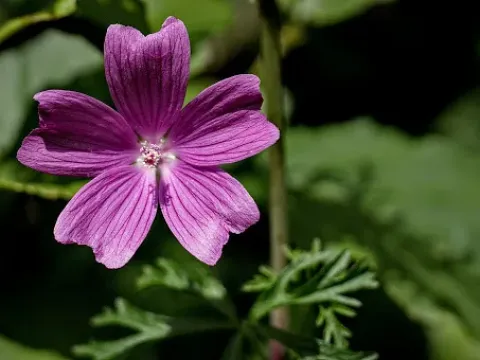
Malva stipulacea
Malva stipulacea
Malva stipulacea belongs to the Malvaceae family. It is a perennial herbaceous plant recognized in agriculture for its significant biomass yield and robust adaptability to various environmental conditions.
What the section contains
Malva stipulacea
The optimal time for sowing is early spring when the soil temperature consistently reaches 8–10 degrees Celsius. In milder climates, late autumn sowing is also a viable option to ensure early spring germination utilizing winter moisture.
Seeds should be planted at a depth of 2–3 centimeters. A well-prepared seedbed with a fine-crumb structure is essential for uniform emergence, often requiring post-sowing compaction to ensure proper soil-to-seed contact.
The plant develops a strong, deep-reaching root system that provides stability and helps it survive temporary moisture deficits. Its biological growth cycle is tailored for rapid vegetative development throughout the growing season.
In a crop rotation scheme, it is recommended to place this plant after cereals. It contributes significantly to soil structure improvement and leaves behind a substantial volume of organic matter, benefiting the subsequent crop.
Malva stipulacea shows moderate requirements for climatic conditions, exhibiting high frost resistance in temperate zones. It is capable of thriving in varied weather patterns, provided there is adequate access to sunlight.
Fertile loams or chernozem soils with a neutral pH are ideal for this crop. In highly acidic or waterlogged soils, development is significantly restricted, necessitating corrective measures such as liming or improved drainage.
The crop responds positively to both organic and mineral fertilization, particularly during the active stem-growth phase. Nitrogen-based fertilizers significantly increase green mass, while phosphorus and potassium improve overall plant health.
Field maintenance involves inter-row cultivation, which is crucial during the first year to manage weeds. As the plant becomes established in subsequent years, its dense canopy naturally suppresses most weed competition.
Although it is relatively drought-tolerant once established, supplemental irrigation during the initial growth phases ensures consistent biomass production, especially during exceptionally dry summer months.
The primary agricultural use of Malva stipulacea is as a high-protein green fodder for livestock. Its nutritional composition makes it an excellent supplement for cattle feed rations, improving overall herd productivity.
Beyond its forage role, it is increasingly used as a cover crop or green manure. Its rapid decomposition and rich nutrient content effectively replenish soil organic carbon, helping maintain long-term field fertility.
There is also interest in using the plant's stems for fiber production in the paper and textile industries. The durability and flexibility of the extracted fibers offer a sustainable alternative to traditional raw materials.
Yields of green mass can reach 400–600 centners per hectare under optimal conditions. These figures are highly dependent on the number of harvests per season and the availability of nutrient inputs in the soil.
Furthermore, it serves as a valuable honey plant. Beekeepers appreciate the long flowering period, which provides a consistent nectar source, thus adding secondary economic value to the farming operation.
Fungal diseases like rust and powdery mildew are the most common threats, particularly in humid climates. Ensuring good spatial isolation and avoiding excessive plant density are effective preventive measures.
Pests, such as weevils and aphids, may affect young seedlings. Implementing integrated pest management strategies, focusing on biological controls, helps manage populations without relying heavily on chemical inputs.
Weed infestation poses a challenge mainly during the establishment phase. Once the plant covers the field area, it becomes highly competitive. Proper pre-planting soil preparation is essential to reduce the weed seed bank.
To avoid pathogen buildup, it is advised to rotate the crop and return to the same plot only after a 3–4 year interval. This practice disrupts the life cycles of soil-borne pests and specific crop diseases.
High-quality, treated seeds should always be used to minimize the risk of introducing seed-borne infections. Regular field monitoring allows for early detection of problems before they affect the entire crop yield.
Harvesting for fodder should be timed during the budding phase. At this stage, the plant balances biomass volume with nutritional quality, ensuring the harvested material is digestible and rich in essential nutrients.
Rotary mowers are the preferred equipment for harvesting. The shredded biomass is typically either ensiled or fed directly, ensuring minimal loss of nutrients and maintaining the freshness of the plant material.
When harvesting for fiber, the process is delayed until the stems reach maturity and maximum density. This requires specialized harvesting machinery capable of processing the coarser, fibrous plant stalks.
After the final harvest, the remaining stubble should be incorporated into the soil. This provides an excellent source of organic matter, further enhancing soil tilth and fertility for the following season.
Seed harvesting is conducted when the seed pods turn brown, taking care to prevent shattering. The collected seeds must be thoroughly dried and stored in ventilated conditions to ensure long-term viability and prevent mold growth.