
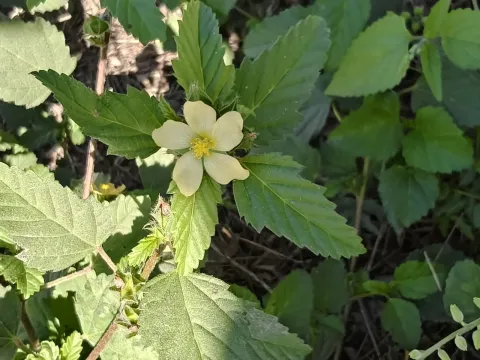
Malvastrum
Malvastrum
Malvastrum belongs to the Malvaceae family and consists of herbaceous plants or subshrubs. Sowing is typically carried out in spring when the soil warms up to 12–15 degrees Celsius, ensuring uniform germination across the field.
What the section contains


Malvastrum
For successful seedling emergence, adequate substrate moisture is required during the first weeks after sowing. The optimal seeding depth is 1–2 centimeters, as small seeds require firm contact with the soil to initiate biological growth processes.
In industrial farming, row seeding with 45–60 centimeter spacing is preferred. This setup allows for efficient inter-row cultivation and suppresses weed proliferation during the early vegetative stages.
When using Malvastrum as a ground cover, broadcasting methods may be employed, though this approach necessitates thorough field preparation and weed control before a full canopy is established.
In arid regions, it is recommended to shift sowing dates to earlier in the season to allow plants to establish strong root systems before the peak summer heat occurs.
The crop has moderate soil fertility requirements but thrives best in light, well-drained sandy loam or loamy soils. It demonstrates high tolerance to slightly acidic and neutral soil pH levels.
Malvastrum is noted for its high drought resistance, making it a promising crop for regions with insufficient or erratic rainfall. The plant effectively utilizes deep moisture reserves due to the development of a strong taproot system.
Solar exposure is a critical factor for normal development; therefore, fields should be open and sunny. Shading leads to elongated stems, reduced foliage, and delayed biomass accumulation.
For growth optimization in intensive systems, the application of phosphorus and potassium fertilizers is recommended to stimulate root development and improve plant resilience against abiotic stressors.
While the plant withstands short-term temperature fluctuations well, prolonged late frosts during the growing season can negatively impact the yield of generative organs.
The primary use of Malvastrum is the production of green biomass, valued for its nutritional content. Under optimal agronomic management and sufficient irrigation, dry matter yields can reach significant levels.
The crop is also considered a potential source of valuable plant fiber. The biological nature of the species allows for multi-stage harvesting if the plants are intended for breeding purposes or seed production.
In agro-ecosystems, Malvastrum often serves as a honey plant, providing a stable nectar source during the summer months. Nectar productivity depends on species diversity and the quality of soil nutrient management.
To increase biomass output, timely nitrogen fertilization during the active stem elongation phase is recommended to boost vegetative growth.
Economic efficiency in Malvastrum cultivation depends directly on plant density and the level of mechanization implemented during the harvesting process.
Like other members of the Malvaceae family, Malvastrum can be susceptible to common pathogens. Among fungal diseases, leaf rust and powdery mildew are the most significant, appearing under high humidity and poor ventilation.
Pests such as spider mites and various weevil species can cause substantial damage by feeding on young shoots and reducing the photosynthetic activity of the leaves.
Protection measures include preventative spraying with systemic fungicides at the first sign of infection. Crop rotation is essential, and it is recommended not to return the crop to the same plot for at least 3–4 years.
Pest population control is achieved through maintaining optimal plant density and timely weed management, as weeds often act as reservoirs for both infections and pests.
Utilizing integrated pest management (IPM) systems allows for the minimization of chemical pesticides, which is particularly relevant when growing Malvastrum for organic production markets.
Harvesting Malvastrum for green biomass occurs at the beginning of the flowering stage when the concentration of nutrients in the aerial parts is at its peak. At this point, the biomass provides the best nutritional value for livestock.
For seed harvesting, it is necessary to wait for the seed pods to mature fully. Harvesting should be performed during dry weather to prevent mold growth and ensure the seeds maintain their viability during storage.
Mechanical harvesting is carried out using mowers or combine harvesters adjusted for small-seeded crops. Pre-harvest desiccation can facilitate a more uniform ripening process across the field.
Once harvested, the biomass requires immediate drying or processing. The green matter loses moisture quickly, which simplifies transport and storage but requires careful temperature management.
Seed storage must take place in dry, ventilated areas with low humidity to prevent microbial growth and ensure high germination energy is maintained over long periods.