
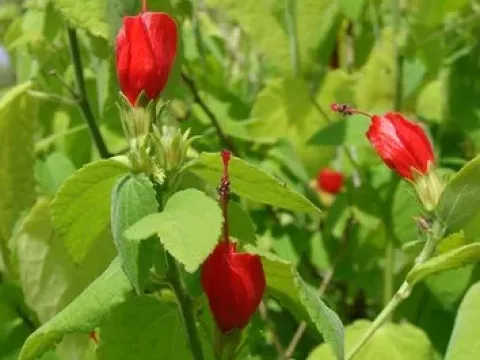
Malvaviscus brevipes
Malvaviscus brevipes
The sowing of Malvaviscus brevipes seeds should begin in early spring to ensure the plants establish a strong root system before the peak summer heat.
What the section contains
Malvaviscus brevipes
Seeds benefit significantly from soaking in warm water for 24 hours prior to planting to soften the outer coat and improve overall germination uniformity.
A sterile, well-draining potting medium is essential during the germination phase to prevent damping-off disease in young seedlings.
Once seedlings develop their second set of true leaves, they should be transplanted into individual pots to avoid competition for nutrients and light.
Acclimatization to outdoor conditions should be done gradually over a period of two weeks before transplanting the plants to their final permanent location.
Malvaviscus brevipes is a member of the Malvaceae family, native to tropical regions where it thrives in warm, humid environments.
The plant requires full sun to partial shade; however, maximizing light exposure is key to achieving profuse flowering throughout the growing season.
Soil quality should be high, rich in organic matter, and slightly acidic, ensuring that moisture is retained without causing waterlogging around the roots.
Temperature management is critical as the plant is sensitive to frost and extreme cold; it is best suited for climates where temperatures stay above 15 degrees Celsius.
Routine pruning is highly recommended to maintain the plant's shape, remove deadwood, and encourage the production of vigorous new flowering branches.
Spider mites are the most common pest threat for this species, especially during periods of low humidity or when the plant is kept in dry, heated environments.
Whiteflies and aphids can also colonize the plant, sucking sap from the undersides of leaves and reducing the plant's overall vigor and aesthetic appeal.
Fungal issues, such as root rot, often occur due to overwatering or inadequate soil drainage, which inhibits oxygen flow to the root system.
Maintaining adequate air circulation around the canopy is a primary cultural practice that helps prevent the development of powdery mildew and other foliar fungi.
Integrated pest management strategies should be employed, prioritizing natural predators or mild soaps before resorting to synthetic pesticides to maintain environmental health.