
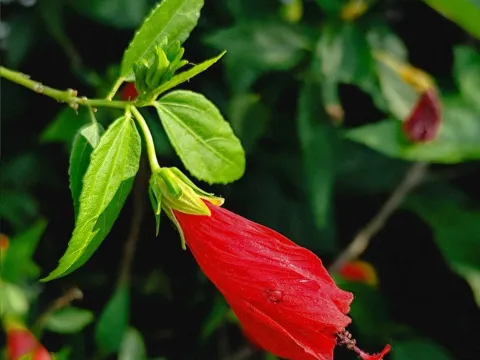
Malvaviscus
Malvaviscus
Malvaviscus is a genus of shrubs and trees belonging to the Malvaceae family. Native to tropical and subtropical regions of the Americas, these plants are widely recognized for their unique, non-opening flowers, which earned them the common name "sleeping hibiscus".
What the section contains
Malvaviscus
The plant exhibits vigorous growth habits, often reaching considerable height if conditions allow. Its leaves are typically cordate or ovate with serrated edges, providing a dense, lush green foliage that stays evergreen in frost-free environments.
Climatic requirements are strict: Malvaviscus thrives in full sun to partial shade and requires consistent warmth. It is highly sensitive to frost, which limits its outdoor cultivation to USDA hardiness zones 9 and above, or requires container gardening in colder regions.
For optimal health, the soil must be well-drained and nutrient-rich. While the plant can tolerate a variety of soil types, it performs best in loamy, slightly acidic soil. Adequate moisture is essential for vigorous flowering, though waterlogging must be avoided to prevent root rot.
Economically, Malvaviscus is primarily valued as an ornamental plant. It is frequently utilized in landscaping for hedges, screening, or as a focal specimen due to its ability to attract hummingbirds and various butterflies with its nectar-rich flowers.
The most significant pests affecting Malvaviscus include aphids, whiteflies, and spider mites. These pests tend to colonize the underside of leaves, especially in greenhouse conditions where natural predators are absent.
Fungal diseases like powdery mildew can occur if the plant is kept in high-humidity areas with poor air circulation. Overwatering is the most common cause of root disease, which typically leads to yellowing foliage and sudden plant decline.