
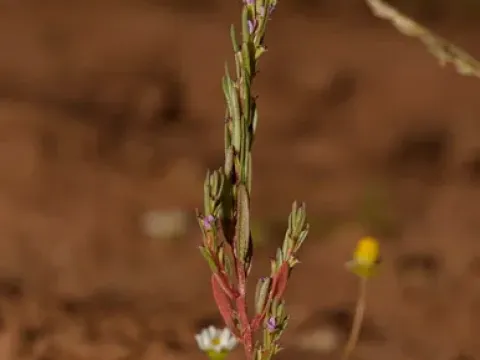
Thyme-leaved loosestrife
Lythrum thymifolium
Thyme-leaved loosestrife (Lythrum thymifolium) is an annual herbaceous plant belonging to the Lythraceae family. It is a distinct species characterized by its miniature stature and small leaves that resemble thyme, which sets it apart from its taller relatives in the same genus.
What the section contains
Thyme-leaved loosestrife
The native distribution of this plant includes the Mediterranean basin, the Caucasus, and parts of Western Asia. It typically thrives in wetland ecosystems, including riverbanks and damp meadows, where moisture availability remains consistent throughout the growing season.
Cultivation requires exposure to full sunlight to ensure optimal growth. Shaded conditions significantly limit the plant's development and diminish its potential for both ornamental use and biomass production, making the selection of an open site a priority for the grower.
Regarding soil requirements, the plant favors moisture-retentive, loamy substrates with a neutral or slightly acidic reaction. It is highly sensitive to drought; therefore, irrigation management is essential to prevent wilting and maintain plant vigor during the peak of summer.
The economic value of this crop lies in its utility as a specialized honey plant and its potential role in restoring moist habitats. While not a commercial staple, its hardiness in wet soil makes it a viable candidate for specific ecological and decorative agricultural projects.
Primary threats to Lythrum thymifolium involve soil-borne pathogens and root rot, which proliferate in poorly drained soils. Maintaining proper spacing between plants is necessary to provide adequate ventilation and reduce humidity-related disease risks.
Insect pests such as spider mites can infest the crop under dry conditions. Implementing an integrated pest management strategy, including monitoring and biological controls, is highly recommended to protect the integrity of the stand throughout the growing period.