
Sonneratia
Sonneratia L. f.
Sonneratia is a genus of evergreen mangrove trees belonging to the Lythraceae family. These plants are perfectly adapted to the harsh intertidal zones of the tropics, where they play a vital role in coastal stabilization and biodiversity.
What the section contains

Sonneratia
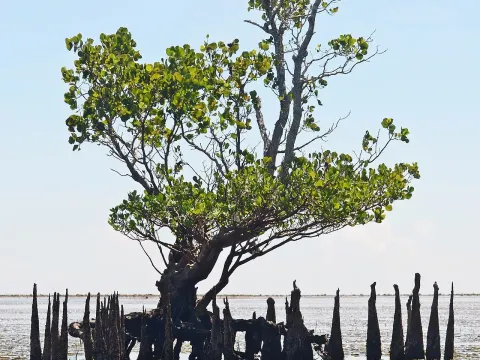
A defining botanical characteristic of the genus is the presence of specialized structures called pneumatophores. These are vertical, finger-like roots that project upwards from the anaerobic mud, allowing the plant to exchange gases in flooded environments.
The growth of Sonneratia is strictly linked to specific tropical climates. It requires high constant temperatures and a reliable supply of brackish or saline water, typically found in estuarine habitats where riverine and marine waters mix.
Soil requirements for this culture involve deep, soft, and nutrient-rich silt or muddy substrates. These soils must remain saturated with water to support the root systems while maintaining a delicate balance of salinity for optimal growth.
In terms of human use, Sonneratia species are primarily valued for ecosystem services rather than commercial agriculture. They are essential for protecting coastal villages from extreme weather events, preventing shoreline erosion, and serving as nurseries for marine life.
Environmental degradation, particularly oil spills, poses a critical threat to Sonneratia plantations. Since the pneumatophores rely on direct contact with the air, oil films covering the root tips can lead to the suffocation of the entire tree.
Pests such as wood-boring insects and termites can damage the timber and weaken the structure of the trees. These pests are particularly aggressive in areas where the trees are already stressed by unfavorable changes in water salinity.
Pathogenic fungi often target the root systems, especially when the water flow is restricted or stagnant. This can lead to root rot, which subsequently manifests as yellowing of leaves and significant canopy dieback across the plantation.
The loss of habitat due to land reclamation for shrimp farming or urban development remains the most significant threat to the survival of Sonneratia. Removing these trees leads to the immediate collapse of the local protective biological barrier.
Sustainable management requires maintaining the natural hydrological patterns of the estuary. Protective measures against illegal logging and water pollution are essential to ensure the longevity of Sonneratia mangrove forests.