
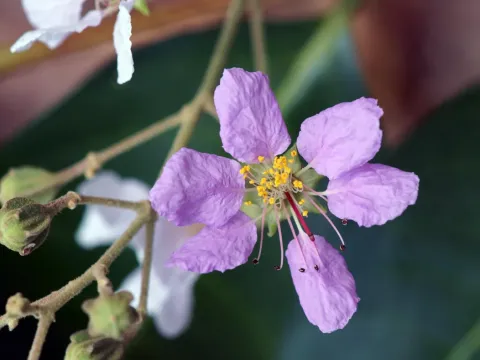
Lagerstroemia archeriana
Lagerstroemia archeriana
Lagerstroemia archeriana belongs to the Lythraceae family and originates from the tropical landscapes of Australia. This woody species is highly valued in horticulture for its elegant growth habit and attractive foliage, making it a unique addition to warm-climate gardens.
What the section contains
Lagerstroemia archeriana
The culture has strict requirements for solar radiation. To thrive, it must be placed in a full-sun location, as insufficient light will result in weak growth and a complete failure to produce blooms. Exposure to at least six to eight hours of direct sunlight is necessary.
Regarding soil, the plant performs best in fertile, well-draining soils with a slightly acidic to neutral pH. Proper soil aeration is crucial; therefore, heavy clay soils should be amended with organic matter or sand to improve structure and prevent root asphyxiation.
Temperature management is the most critical aspect of the plant's requirements. Being a tropical native, Lagerstroemia archeriana cannot tolerate frost. In non-tropical regions, it is recommended to keep the plant in containers that can be moved indoors during winter.
Maintenance includes regular fertilization during the growing season using a balanced fertilizer. Additionally, pruning is essential to maintain the desired shape and stimulate new growth, which leads to more profuse flowering in the subsequent seasons.
Pests such as aphids and mealybugs are the primary threats to the foliage and tender young shoots. These insects weaken the plant by feeding on its sap, which requires prompt treatment with appropriate systemic or contact insecticides.
Powdery mildew is a common fungal infection, especially when humidity fluctuates or when plants are crowded. Maintaining good spacing and ensuring adequate airflow around the branches can effectively reduce the risk of this disease.
Root rot is often the result of improper irrigation practices or poor soil drainage. When the roots remain in waterlogged conditions, they lose the ability to absorb nutrients, which is typically indicated by yellowing leaves and wilting symptoms.
Leaf spot diseases can also impact the ornamental quality of the plant under high humidity conditions. Regular application of preventative fungicides during the rainy season is often considered a best practice for healthy cultivation.
Early detection through frequent physical inspections is vital for protecting the plant's health. Removing dead or diseased tissue immediately helps in curbing the spread of pathogens throughout the specimen and nearby plants.