
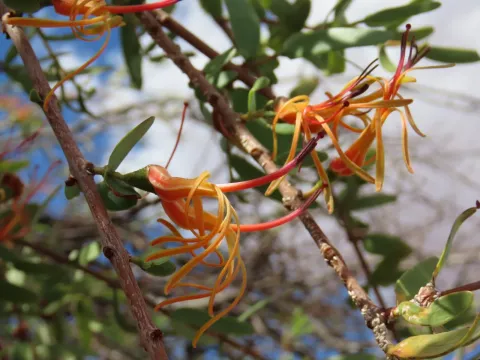
Plicosepalus
Plicosepalus
Plicosepalus is a genus of semi-parasitic shrubs belonging to the Loranthaceae family. Unlike conventional agricultural crops, this plant is categorized as a parasitic agent that targets woody species, utilizing specialized root structures called haustoria to tap into the host's vascular system.
What the section contains

Plicosepalus
The distribution of Plicosepalus is primarily centered in arid and semi-arid regions across Africa and the Arabian Peninsula. Its biological adaptation allows it to flourish in environments characterized by high solar radiation and extremely limited water availability.
The plant demonstrates a unique physiological ability to sustain itself through limited photosynthesis while relying heavily on the host tree for water and mineral nutrients. This makes it an opportunistic organism that can exploit a wide variety of native and cultivated tree species.
Soil requirements for Plicosepalus are virtually non-existent, as the plant maintains no direct contact with the ground for nutrient uptake. It focuses its biological energy on developing strong attachments to branches, making the condition of the host tree the only limiting environmental factor.
Management techniques involve rigorous pruning and monitoring programs. Because Plicosepalus can significantly deplete the vigor of host trees, agricultural managers in affected areas prioritize the complete removal of infected plant tissues to prevent spreading to surrounding orchards or forests.
In its native ecosystem, Plicosepalus faces pressure from various insect herbivores that consume its foliage and reproductive organs. These insects play a vital role in natural population control, preventing the parasite from overwhelming the host population.
Fungal pathogens can occasionally affect the structural integrity of the haustorial connections, effectively cutting off the nutrient supply from the host tree. While not a commercial control method, it represents a natural check on the proliferation of the parasite.
Human activity is the most significant threat to the survival of Plicosepalus within managed landscapes. The intentional clearing of infected woody vegetation and systemic maintenance of ornamental or fruit-bearing trees drastically disrupt the parasite's life cycle.
Avian species serve as the primary vector for seed dispersal. The sticky seeds adhere to birds, which then transport them to new hosts, ensuring the successful colonisation of new branches and trees within a localized ecosystem.
Environmental stressors such as prolonged drought can indirectly kill the parasite by forcing the host tree into dormancy or death. Without a living host, Plicosepalus cannot complete its life cycle and eventually succumbs to the harsh environmental conditions.