
Tapinanthus
Tapinanthus
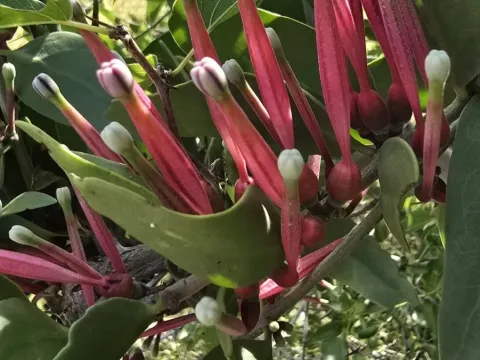
Tapinanthus is a genus of hemiparasitic plants belonging to the Loranthaceae family. These plants are known for their ability to colonize the branches of various trees, establishing a vascular connection to the host to extract water and essential nutrients.
What the section contains
 Tapinanthus bangwensis
Tapinanthus bangwensis
Tapinanthus bangwensis
 Tapinanthus belvisii
Tapinanthus belvisii
Tapinanthus belvisii
 Tapinanthus blantyreanus
Tapinanthus blantyreanus
Tapinanthus blantyreanus
 Tapinanthus dependens
Tapinanthus dependens
Tapinanthus dependens
 Tapinanthus globiferus
Tapinanthus iturensis
Tapinanthus iturensis
Tapinanthus ogowensis
Tapinanthus ogowensis
Tapinanthus pentagonia
Tapinanthus pentagonia
Tapinanthus globiferus
Tapinanthus globiferus
Tapinanthus iturensis
Tapinanthus iturensis
Tapinanthus ogowensis
Tapinanthus ogowensis
Tapinanthus pentagonia
Tapinanthus pentagonia
 Tapinanthus sessilifolius
Tapinanthus sessilifolius
Tapinanthus sessilifolius
Tapinanthus
Originating primarily from the tropical regions of Africa, these plants have adapted to various climates, ranging from semi-arid savannas to dense forests. Their survival strategy relies on the host tree's ability to provide hydraulic support throughout the year.
Botanically, Tapinanthus plants possess thick, leathery leaves capable of photosynthesis, which differentiates them from holoparasites. Despite this, their growth is entirely dependent on the host for access to the soil's resources, which they tap into via specialized haustorial attachments.
The reproductive cycle is heavily reliant on avian vectors. Birds consume the fleshy fruits and disperse seeds onto host branches. The seeds are coated in a sticky substance (viscin) that anchors them firmly to the bark, allowing germination to occur directly on the tree surface.
In agricultural settings, particularly in orchards, Tapinanthus is viewed as a significant pest. It often targets weakened trees, leading to stunted growth, branch dieback, and significant yield reductions in economically important species like citrus and cocoa.
The primary threat posed by Tapinanthus is its ability to bypass the host's natural defenses, causing a systemic disruption of water and mineral flow. This leads to the gradual decline of the tree's physiological health and reduces its ability to produce fruit.
Sanitary pruning remains the most effective management strategy. By removing the infected branches before the parasite sets seed, farmers can break the life cycle and protect surrounding healthy trees from infestation.
There are few chemical options for control due to the intimate connection between the parasite and the host. Any systemic chemical treatment risks damaging the crop, making physical intervention the only reliable and safe choice for commercial agriculture.
Environmental factors, such as drought or poor soil management, can predispose trees to heavier infestation. Maintaining optimal tree vigor through proper fertilization and irrigation is a key preventative measure to minimize successful parasite attachment.
Ongoing research is looking into the use of biological control agents that target the seeds or specific tissues of Tapinanthus, but effective field-scale applications remain limited. Regular orchard inspections are vital to ensuring sustainable crop protection.