
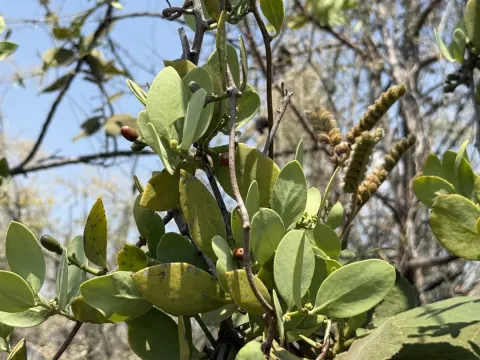
Struthanthus
Struthanthus
Struthanthus is a genus of hemiparasitic plants that belong to the Loranthaceae family. These plants are known for their unique ability to grow on the branches of woody plants, using specialized structures called haustoria to draw water and nutrients directly from the host's vascular system.
What the section contains


Struthanthus
The native distribution of this genus spans across tropical and subtropical regions of the Americas. These plants typically thrive in environments where they can access significant amounts of sunlight, which is crucial for maintaining their photosynthetic activity, as they are not obligate parasites.
Botanically, Struthanthus species are characterized by their evergreen foliage and distinct growth patterns that allow them to spread across the host's canopy. The plants produce flowers that attract specific pollinators, ensuring the dispersal of seeds through the local bird population in their natural habitat.
Regarding environmental requirements, Struthanthus prefers warm and humid climates that support continuous growth. The genus is highly dependent on the availability of suitable host trees that can provide sufficient mechanical support and a steady stream of minerals and water throughout the year.
From an agricultural standpoint, Struthanthus is considered an invasive pest rather than a crop. Its presence in orchards or commercial plantations can be highly detrimental, leading to decreased vigor, stunted growth, and significantly reduced fruit production in the affected host trees.
The primary threat associated with Struthanthus is its cumulative impact on the host's health. Over time, the heavy burden of the parasite can lead to branch dieback and an overall weakening of the tree, making it significantly more susceptible to secondary pests and various fungal diseases.
Effective management strategies center on prevention and early intervention. The most reliable method is manual pruning, where infested branches are removed before the parasite has a chance to expand its reach or produce seeds that could potentially infect neighboring plants in the orchard.