
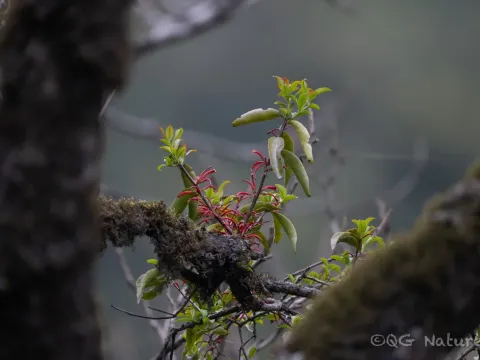
Taxillus
Taxillus
Taxillus is a genus of plants belonging to the Loranthaceae family. Biologically, these are hemiparasitic shrubs that reside on the branches of host trees, utilizing them for physical support and as a source of essential nutrients.
What the section contains


Taxillus
These plants are epiphytic hemiparasites. While they possess green leaves and are capable of photosynthesis, they obtain the water and minerals required for survival from the host tree's xylem through specialized organs called haustoria.
The distribution of the genus primarily covers tropical and subtropical regions of Asia, including India, China, and Southeast Asian countries. They thrive in humid forest ecosystems with a mild climate where trees have dense canopies.
From an agronomic perspective, Taxillus is not a crop but rather a threat to forestry and orchards. It can significantly deplete the health of fruit and ornamental trees, ultimately slowing down their overall growth and productivity.
Their habitat requirements are quite specific: the plant needs high air humidity for seeds to germinate on branches. Seed dispersal is carried out primarily by birds that ingest the sticky berries and distribute them across the forest canopy.
The primary damage caused by Taxillus involves physical harm to the wood and the depletion of the host's resources. Branches infected with this parasite often become brittle, and extensive growth can lead to the death of the entire affected branch.
Controlling this plant is extremely challenging due to its deep penetration into the tree's tissues. Mechanical pruning of the infected parts remains the only radical and effective method for protecting stands and orchards.
In commercial orchards, systematic crown inspection is a mandatory control measure. Detecting young seedlings early prevents major infestations that would otherwise require severe surgical intervention in the tree's crown structure.
Chemical control methods are largely ineffective because any herbicide strong enough to destroy the parasite would likely cause critical damage to the host tree itself. Therefore, agronomists prioritize sanitation pruning.
Given the biological characteristics of Taxillus, it rarely causes the total destruction of a plantation, but yield reductions in infected orchards can reach 30-50% due to the diversion of nutrients away from the fruit toward the parasite.