
Peraxilla colensoi
Peraxilla colensoi
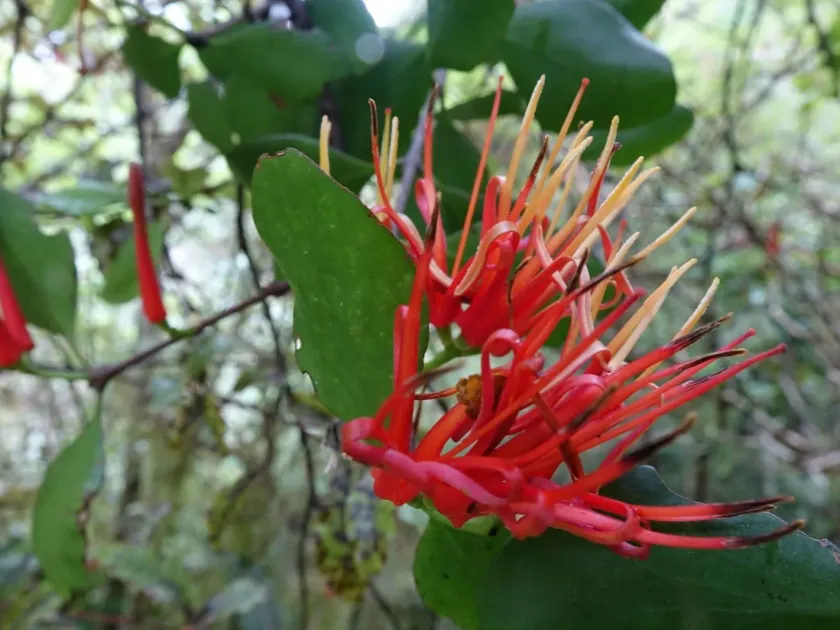
Description
Growing requirements
Peraxilla colensoi is a species of mistletoe belonging to the Loranthaceae family, native to the temperate forests of New Zealand. It is not an agricultural crop but a hemiparasitic plant that thrives exclusively by drawing nutrients from specific host trees, primarily southern beech species.
The botanical structure of this plant is adapted for a parasitic lifestyle, featuring specialized structures called haustoria. These allow the plant to connect to the vascular system of the host, facilitating the transfer of water and essential minerals from the host tree to the mistletoe.
Requirements for its growth include stable forest conditions with high humidity and moderate temperatures. The plant is highly dependent on the physiological vigor of its host tree, as it lacks a traditional independent root system and relies entirely on its host for structural and nutritional support.
No formal agronomic techniques are applied to this plant, as it is a wild species integral to the ecosystem. Conservationists focus on maintaining the health of the beech forests it inhabits, ensuring that the necessary ecological niches remain available for its continued survival.
The species plays an important ecological role by providing nectar for native birds and insects. Its complex life cycle is intricately linked to the presence of specific pollinators that are native to the New Zealand bush, making it a key component of its native habitat.
Main diseases and pests
The primary threat to Peraxilla colensoi is the browsing pressure from invasive mammals, particularly the Australian possum. These animals consume the foliage, buds, and flowers, often severely damaging or killing the mistletoe plants throughout their range.
Loss of native avian pollinators and seed dispersers, such as the tui and bellbird, poses a major risk. A decline in these bird populations directly impacts the reproductive success of the plant, as it relies on them for pollination and the movement of seeds to new hosts.
Forest fragmentation and the decline of host tree populations significantly limit the available territory for new seedlings to establish. Without a healthy population of mature beech trees, the species cannot propagate or sustain its density in affected regions.
Environmental stressors, such as climate change, alter the microclimate of the forest, potentially leading to increased dryness. Since the plant requires specific humidity levels to support its water-demanding metabolism, such changes reduce its overall vitality and reproductive output.
Interspecific competition and habitat degradation further threaten the species, as it is slow to recover from physical damage. Combined with a relatively specialized niche, these factors make the species vulnerable to localized extinction in areas with high human or invasive species impact.