
Peraxilla tetrapetala
Peraxilla tetrapetala
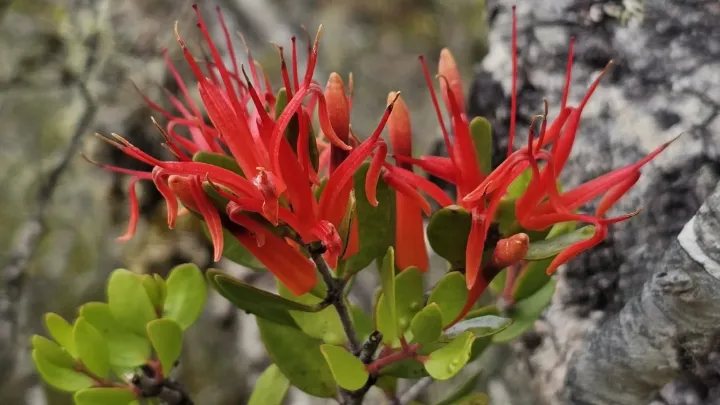
Description
Growing requirements
Peraxilla tetrapetala belongs to the Loranthaceae family and is known as a specialized hemi-parasitic plant. It is widely recognized for its unique ability to grow on the branches of host trees, gaining nutrients directly from their vascular system.
The plant is endemic to New Zealand and is found naturally across both the North and South Islands. Its growth cycle is inextricably linked to the presence of specific tree species, primarily from the genus Nothofagus.
Regarding environmental requirements, this species thrives in humid forest conditions. It attaches itself to host branches using a haustorium, a specialized structure that penetrates the bark to absorb water and minerals from the tree's xylem.
Botanically, it is characterized by vibrant red flowers that have evolved to attract native honeyeater birds for pollination. The leaves are thick and succulent, enabling the plant to maintain physiological functions even in canopy environments with variable light.
While not a traditional agricultural crop, Peraxilla tetrapetala is of high conservation value. It acts as a critical winter food source for native nectar-feeding birds, thereby playing an essential role in the maintenance of local forest health.
Main diseases and pests
The primary threat to the survival of Peraxilla tetrapetala is the invasive Australian brush-tailed possum. These animals feed heavily on the plant's foliage and flowers, often causing severe defoliation and the eventual death of the host-parasite system.
Climate change poses a secondary, yet significant risk by altering the timing of flowering and the availability of avian pollinators. As the synchronization between the plant and the birds shifts, reproductive success rates tend to decline.
Habitat loss due to deforestation significantly limits the colonization potential of the species. Since the seeds require specific conditions to germinate on a suitable host branch, the reduction of mature forests prevents the natural spread of the plant.
Various phytophagous insects and fungal pathogens can also inflict damage, though these are typically secondary to the pressure caused by mammalian herbivory. Monitoring for health decline in affected trees is a standard practice in ecological management.
Conservation efforts currently focus on intensive pest control programs within native forests. Protecting this plant is vital for the broader ecosystem, as it supports biodiversity and remains a symbol of New Zealand's unique botanical heritage.