
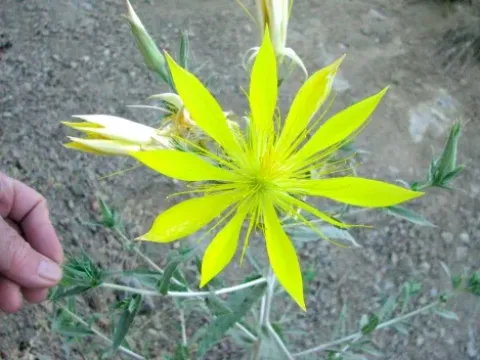
Smoothstem blazingstar
Mentzelia laevicaulis
Mentzelia laevicaulis, commonly known as smoothstem blazingstar, is a distinctive biennial or perennial plant within the Loasaceae family. It is native to the western regions of North America, where it thrives in harsh, dry environments.
What the section contains
Smoothstem blazingstar
This species is highly adapted to arid conditions and is typically found in loose, stony, or gravelly soils. In a horticultural context, providing a substrate that mimics these natural conditions is essential for the plant's long-term survival.
The cultural requirements are centered on full sun exposure. The plant requires constant access to intense light, as it is physiologically structured to maximize photosynthetic efficiency in open, exposed landscapes.
Water management is critical. While the plant possesses a deep taproot that allows it to survive periods of drought, it requires controlled moisture during the seedling stage. Once established, watering should be minimal to prevent root issues.
The morphology of the plant includes large, showy yellow flowers that typically open in the evening. This behavior is a specialized adaptation to attract specific nocturnal pollinators, making the plant a unique addition to xeriscaping projects.
The smoothstem blazingstar is naturally protected from various herbivores and insects due to its specialized leaf trichomes. These hairs are hooked at the tips, creating a sticky, abrasive surface that deters many potential pest species.
The primary threat to the health of Mentzelia laevicaulis is the introduction of excessive moisture to the root zone. In garden settings with poor drainage, the plant is extremely susceptible to root and crown rot, often caused by soil-borne pathogens.
In humid climates or poorly ventilated areas, the plant may experience issues with powdery mildew. Ensuring adequate spacing between individual plants is a necessary cultural practice to promote airflow and decrease humidity levels.
Aphids can occasionally target the developing buds and succulent tips of the plant during the early growth phases. Monitoring should be focused on these areas to catch infestations before they affect the flowering performance of the specimen.
The species is also vulnerable to competitive pressure from invasive weeds during its establishment phase. Because it grows slowly in its first year, it requires a weed-free zone around the base to ensure it receives sufficient nutrients and light.