
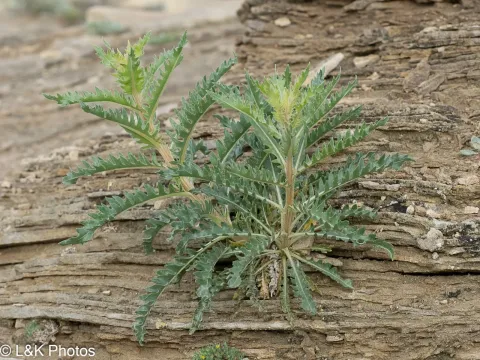
Ten-petal blazingstar
Mentzelia decapetala
Mentzelia decapetala is a sun-loving and heat-dependent plant, meaning that direct sowing in open fields should only occur after the soil has completely warmed up. The optimal time for planting is late spring or early summer, when the risk of night frosts is entirely gone.
What the section contains
Ten-petal blazingstar
The seeds of this culture have a pronounced dormant period, so it is highly recommended to stratify the seeds to improve germination rates. Sowing is carried out at a shallow depth of no more than 1–2 centimeters, ensuring the seeds are lightly covered with loose, well-draining substrate.
In regions with moderate climates, a transplanting method is often practiced to speed up the development process. Seeds are sown into individual pots during March or April, allowing for robust seedlings to be ready by the time stable warm weather arrives.
When planting, it is necessary to maintain a spacing of at least 40–50 centimeters between individual plants. This ensures sufficient room for the development of a strong taproot system and prevents overcrowding, which can hinder plant health.
A crucial factor for success is the use of fresh seeds, as the viability of this culture can decrease significantly with long-term storage. Once germination occurs, the rows should be thinned to leave only the most vigorous and healthy specimens.
This culture is a typical representative of arid regions and has specific soil composition requirements. The ideal medium for Mentzelia is a well-draining, sandy, or gravelly soil type with a neutral to slightly alkaline pH level.
The plant possesses exceptional drought tolerance, which is a result of its evolutionary origins in the arid zones of North America. Excessive soil moisture is a critical factor and can lead to the rapid decay of the root system through fungal root rot.
To ensure full flowering and proper seed set, Mentzelia decapetala requires maximum solar exposure throughout the entire day. Even minor shading leads to leggy stems and a sharp decline in the intensity of flower bud formation.
During the active vegetation period, the plant does not require heavy applications of mineral fertilizers. On the contrary, an excess of nitrogen in the soil promotes exuberant vegetative growth at the expense of flower quality and overall resilience to environmental stressors.
Belonging to the Loasaceae family, the plant exhibits distinctive botanical features, including rigid, pubescent leaves. These specialized structures serve to minimize water evaporation, allowing the plant to thrive even under extreme summer temperatures.
The primary threat to Mentzelia decapetala is root rot, which typically occurs when irrigation protocols are not followed correctly. Constant water stagnation in the root zone leads to irreversible tissue damage and plant death.
Among pests, spider mites represent the greatest danger, as they multiply rapidly in hot and dry climates. They infest the undersides of the leaves, resulting in premature yellowing and dropping of the foliage.
Occasionally, the plants may be subject to aphid infestations that sap the nutrients from young flower buds and growing stem tips. For insect control, it is recommended to use systemic organic pesticides or mild soap solutions if the infestation is localized.
Powdery mildew may manifest during seasons characterized by abnormally high humidity. To prevent this fungal disease, growers should avoid dense planting patterns and ensure adequate air circulation between the plants.
In general, Mentzelia decapetala demonstrates high phytosanitary resistance compared to domesticated crop varieties. When proper site selection and irrigation regimes are maintained, serious outbreaks of disease are extremely rare for this species.