
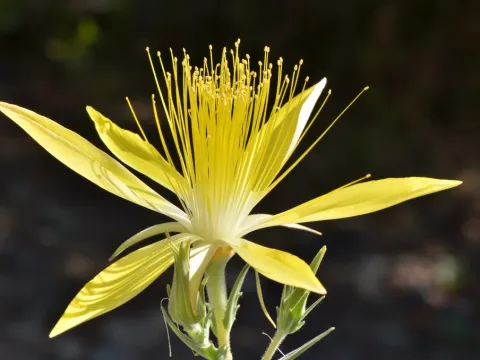
Mentzelia
Mentzelia L.
Direct sowing of Mentzelia seeds outdoors should only occur once the danger of late spring frost has completely passed and the soil has warmed up.
What the section contains

Mentzelia
Ideally, seeds are planted in late May when daytime temperatures are consistently warm and the soil temperature reaches at least 18 degrees Celsius.
Starting seeds indoors in biodegradable peat pots during early spring can help secure a longer flowering season, especially in northern regions.
It is crucial to handle the seedlings with extreme care during transplanting, as the root system is highly sensitive and does not recover well from disturbances.
Proper spacing is essential to ensure that each plant has enough room to grow and receive adequate sunlight, reducing competition for essential nutrients.
Mentzelia belongs to the Loasaceae family and is well-adapted to arid environments, requiring full sun exposure to thrive and produce its signature blossoms.
The plant performs best in sandy, well-draining soil with a neutral or slightly alkaline pH, making it highly suitable for xeriscaping projects.
Watering requirements are relatively low, as the plant is adapted to drought; overwatering is more detrimental to the plant than prolonged dry spells.
Supplementary fertilization with balanced phosphorus and potassium fertilizers can be beneficial during the budding stage to enhance floral development.
Good air circulation is vital for Mentzelia, which is why it thrives in open, airy landscapes rather than crowded or damp garden beds.
Root rot is the most common issue encountered when growing Mentzelia, primarily caused by excessive soil moisture and poor drainage in the planting area.
During periods of high humidity and stagnant air, the plant may become susceptible to powdery mildew, which can significantly damage its foliage.
Insect pests, particularly aphids and spider mites, can become problematic during hot and dry summer months by attacking the young, tender growth.
Integrated pest management, including regular visual inspection and the use of insecticidal soaps, is recommended for maintaining healthy plant populations.
- Monitoring for aphid activity on the undersides of leaves.
- Ensuring excellent soil drainage to prevent fungal infections.
- Removing debris around plants to discourage pest habitats.