
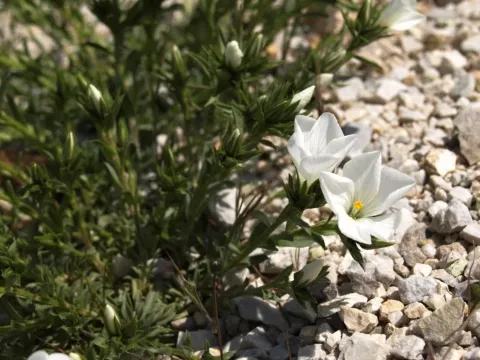
White-flowered flax
Linum leucanthum
White-flowered flax is a photophilic long-day crop, so planting should begin as early as possible once the soil temperature reaches 5–8 degrees Celsius.
What the section contains
White-flowered flax
The optimal sowing time typically falls in the second or third decade of April, depending on the specific regional climatic conditions of the season.
It is important to avoid late planting, as high temperatures during the germination phase can negatively affect plant density and initial development rates.
Narrow-row or standard row seeding with row spacing of 12–15 centimeters is preferred to ensure uniform distribution of plants across the field area.
Seed depth should not exceed 2–3 centimeters to promote uniform emergence and prevent excessive energy depletion of the young seedlings.
This species belongs to the Linaceae family and is an herbaceous plant distinguished by its unique white flowers and high environmental adaptability.
The crop prefers light, well-drained loamy or sandy soils with a neutral pH, as waterlogging is detrimental to its sensitive root system.
The plant demonstrates good drought resistance and can adapt to poorer soils, although moderately fertile plots are required to achieve high-quality seed yields.
Optimal climatic conditions include a moderately warm growing season with sufficient sunny days during the flowering and seed maturation stages.
In crop rotation, it is best to place white-flowered flax after cereal crops, while avoiding precursors prone to accumulating common soil-borne pathogens.
The economic use of this species is primarily focused on obtaining valuable seeds, which are rich in fatty acids and dietary fibers used in various industries.
The crop's yield potential depends directly on the plant stand density, which should ideally be around 400–600 seedlings per square meter.
Productivity potential can vary significantly depending on agronomic practices, mineral nutrition levels, and moisture availability during critical growth phases.
Harvesting is performed at full maturity, when the seeds reach their characteristic color and the capsules become dry and brittle, indicating moisture content reduction.
Post-harvest handling, including drying and cleaning of the seed material, is crucial to prevent losses and ensure long-term storage quality.
Major threats to flax crops include fusarium wilt, which can lead to significant biomass losses and drastically reduce the final seed production capacity.
Anthracnose and rust can also develop under high humidity conditions, so preventive measures must include crop rotation and the use of resistant varieties.
Among pests, flax beetles pose the greatest threat during the seedling stage, as they can destroy young plantings in a very short period of time.
Flax thrips and cutworms may also cause damage, reducing leaf surface area and impairing seed filling within the capsules if not managed properly.
An integrated pest management system includes seed treatment before sowing and monitoring insect populations to apply insecticides as needed during the growing season.