
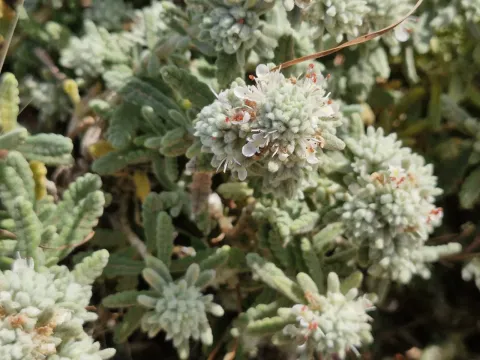
Vincent's germander
Teucrium vincentinum
Vincent's germander (Teucrium vincentinum) is a perennial plant belonging to the Lamiaceae family. Native to the Iberian Peninsula, this species has evolved to thrive in harsh, Mediterranean environments with poor soil quality and high sunlight intensity.
What the section contains
Vincent's germander
The plant requires well-drained, gritty, or sandy soil to prevent root rot, which is the primary threat to its survival in cultivation. It is highly adapted to neutral to alkaline soil conditions and does not require frequent fertilization, as it is naturally suited for low-nutrient habitats.
The ideal climate for this species includes hot, dry summers and mild winters. It is significantly drought-tolerant, utilizing physiological adaptations to minimize water loss, which makes it an excellent choice for xeriscaping and sustainable herb farming in arid regions.
Agricultural management requires careful attention to weed control during the establishment phase. As a slow-growing herb, the plant can easily be outcompeted by invasive weeds if the field is not maintained properly in its first and second years.
Proper spacing between plants is crucial to ensure adequate airflow and sunlight penetration. This helps to maintain the health of the foliage and ensures that the plants reach their full medicinal potential before the harvest season arrives.
Harvesting Teucrium vincentinum is typically timed to coincide with the peak flowering period, which is when the plant's essential oil concentration is at its highest. The entire aerial portion is collected for processing.
The harvesting technique involves cutting the stems above the woody base to ensure regrowth. Mechanical harvesting is possible on larger fields, provided the equipment is calibrated to respect the plant's structure and avoid damaging the root crown.
Post-harvest processing focuses on rapid drying in a temperature-controlled environment. The drying process is essential for preserving the volatile compounds that give the plant its characteristic aroma and therapeutic value in medicinal applications.
The primary use of the harvested material is in the production of specialized pharmaceutical supplements, herbal teas, and essential oils. The species is also valued in landscaping for its ornamental, compact appearance and resistance to pests.
The final product must be stored in airtight containers away from direct sunlight and moisture. This ensures that the active biological compounds remain stable, allowing for a longer shelf life and better market value for the harvested herbal crops.