
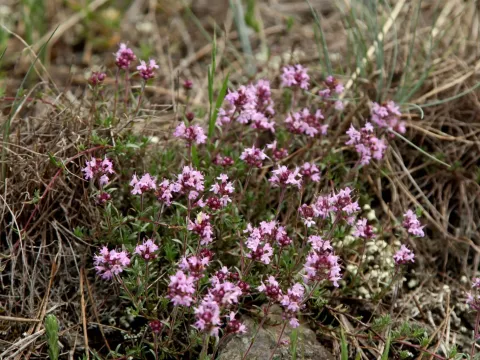
Thymus striatus
Thymus striatus
Thymus striatus is a perennial subshrub belonging to the Lamiaceae family. It is highly valued for its aromatic properties and its ability to thrive in harsh, rocky mountainous environments, where it forms dense, creeping mats.
What the section contains
Thymus striatus
The crop requires full sun exposure to maximize the synthesis of essential oils. Ideally, the soil should be well-drained, sandy, or stony, as the plant is highly susceptible to root rot in waterlogged or heavy clay conditions.
Regarding climate, this species demonstrates remarkable drought tolerance. It is adapted to temperature fluctuations common in high-altitude zones, making it a robust crop for regions with significant seasonal temperature variations.
Agronomic management involves minimal fertilizer application. Excessive nitrogen can lead to rapid, succulent growth that is less aromatic and more susceptible to environmental stress and pest attacks.
Originating from the mountainous regions of Southern Europe, the plant is well-suited for cultivation on sloping terrain where natural drainage is optimal. It requires very little water once the root system is established.
Fungal pathogens represent the primary threat to Thymus striatus, particularly in humid or stagnant air conditions. Powdery mildew and root rot are the most common diseases that can devastate a plantation.
Pest management should focus on preventing aphid infestations. These insects can cause significant damage to the plant's delicate shoots, leading to reduced vitality and poor essential oil quality.
- Maintain proper spacing between plants to ensure airflow.
- Implement a strict drainage management program.
- Use biological pest control agents to preserve the herb's purity.
- Monitor for mites during extremely dry and hot weather.
Weed control is essential during the establishment phase. Since the plant grows slowly, it can easily be outcompeted by aggressive weeds, requiring mechanical intervention or careful manual weeding.
Proper harvest techniques are also part of disease prevention. Harvesting during dry periods and ensuring rapid drying prevents mold development in the harvested biomass, which is critical for medicinal use.