
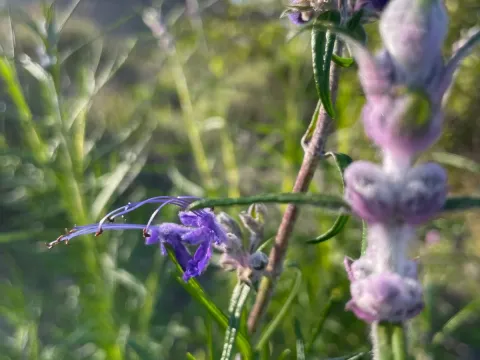
Trichostema
Trichostema
Trichostema, a member of the Lamiaceae family, is a warm-season crop that requires careful timing for sowing. Seeds should be sown when soil temperatures reach at least 15 degrees Celsius to ensure uniform germination.
What the section contains


Trichostema
Starting plants in a greenhouse or nursery is recommended for regions with shorter growing seasons. Seedlings can be transplanted after the danger of spring frost has completely passed.
Seeds are tiny and require light to germinate; therefore, they should be sown on the surface of the growing medium and only lightly pressed down. Covering them with deep soil layers will inhibit the germination process.
For industrial cultivation, a spacing of 30 to 40 centimeters between plants is recommended. This allows for adequate canopy development and provides space for mechanical weeding operations.
Seedbed preparation must focus on creating a fine, weed-free tilth. Compacted soil significantly slows down the initial growth rate of young Trichostema plants, making them more vulnerable to environmental stress.
This crop thrives in sunny locations with well-draining soil. Sandy or loamy soils are ideal, as they prevent waterlogging, which is a major limiting factor for the health of the root system.
Trichostema is moderately drought-tolerant once established but requires consistent moisture during the seedling and vegetative stages. Irrigation management is crucial to maintain high essential oil content.
A neutral to slightly acidic pH is preferred for optimal nutrient uptake. Excessive fertilization, particularly with nitrogen, should be avoided as it can promote vegetative growth at the expense of floral development.
The plant requires good airflow to thrive. Planting in exposed, airy sites helps minimize humidity around the foliage and reduces the risk of fungal outbreaks during the peak growing season.
Regular maintenance of inter-row spaces is necessary to eliminate weed competition. Since Trichostema plants are relatively slow to establish, keeping the surrounding area clean is essential for initial success.
Root rot and crown rot represent the most significant threats to Trichostema. These diseases are almost always associated with poor soil drainage or over-irrigation during cool, wet weather conditions.
Spider mites are common pests in dry, hot environments. Their presence can be identified by fine webbing on the foliage, which leads to chlorosis and potential loss of biomass if left untreated.
Aphid infestations can occur on young, tender growth. Integrated pest management, including the use of neem-based products or beneficial predatory insects, is effective in managing these populations.
Powdery mildew may develop in areas with high humidity and stagnant air. Proper site selection and spacing remain the most effective preventative strategies against this fungal pathogen.
Crop rotation is highly recommended to prevent the buildup of soil-borne pathogens. Rotating Trichostema with non-Lamiaceae crops every three years helps maintain soil health and long-term productivity.