
Thymus tschernjajevii
Thymus tschernjajevii
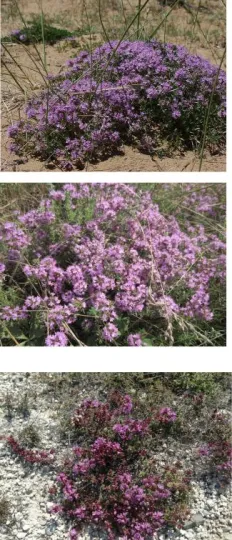
Description
Sowing dates
Sowing of Thymus tschernjajevii seeds is performed in early spring or before winter once the soil temperatures stabilize. Since the seeds are extremely small, they should be sown at a depth of no more than 1 centimeter into well-prepared, loose soil.
For greenhouse cultivation, seeds are sown in March. The seedlings are transplanted into open ground once they reach the stage of 4–5 true leaves, maintaining appropriate spacing to ensure sufficient airflow for the young plants.
Seedlings develop slowly, so maintaining optimal soil moisture during the initial growth phase is critical to prevent soil crusting. Established plants are quite robust and show excellent adaptability to the growing environment.
For industrial farming, row or strip planting methods are recommended. Spacing between rows should be at least 40–50 centimeters to facilitate mechanical weed control and efficient harvesting operations throughout the season.
This perennial plant belongs to the Lamiaceae family. A single planting can maintain high productivity for up to five years, after which plantation renewal is recommended to ensure consistent quality and yield.
Growing requirements
Thymus tschernjajevii is a light-loving crop that requires open, sun-exposed areas. Insufficient light exposure leads to stunted growth, reduced essential oil content, and a weaker overall immune system of the plant.
The crop prefers light, sandy or loamy soils with excellent drainage. Waterlogging is detrimental to the root system, potentially causing rot and disease, so avoiding low-lying fields is essential for crop longevity.
The ideal soil pH is neutral or slightly alkaline. The plant does not require high levels of fertilization, as excessive nutrient application can diminish the concentration of beneficial compounds and aromatic oils.
While the species is highly drought-tolerant, moderate watering is necessary during the first year of growth. Once the root system is fully established, the plant becomes remarkably resilient to dry conditions.
The species exhibits high winter hardiness, allowing it to thrive in temperate climates. During exceptionally harsh winters with little snow cover, light mulching can be used to protect the crown from freezing temperatures.
Yield
Yield capacity for Thymus tschernjajevii typically peaks during the second and third years of life. Proper management and care during these peak years can significantly increase the total biomass and oil yield.
The harvest focuses on the aerial parts of the plant, which are valued for their essential oil profile, particularly the high thymol content. The product is widely sought after in the pharmaceutical and food industries.
Annual yields vary based on soil fertility and climate, but a well-managed hectare can produce several tons of green matter. Consistency in maintenance is the key to maximizing both weight and quality.
Depending on the region, a second harvest may be possible if the first cut is performed early in the season. Leaving enough foliage after the second cut is necessary to ensure the plant enters dormancy in a healthy state.
Peak essential oil concentration occurs during the mass blooming stage. Timing the harvest accurately during this period ensures that the raw material meets all quality standards for commercial processing.
Main diseases and pests
Root rot is the most common issue, usually triggered by excessive humidity and poor soil aeration. Implementing proper drainage and regular surface soil cultivation are the best preventative measures for managing plant health.
Pests such as aphids may occasionally appear, but they rarely cause significant economic damage. Biological control or simple mechanical removal is usually sufficient, as chemical intervention is discouraged in medicinal herb farming.
Weed control is vital during the early growth stages. Manual weeding or light mechanical cultivation between rows is necessary to prevent competition for light, water, and nutrients until the thyme plants form a dense canopy.
Ensuring adequate air circulation around the plants is essential for disease prevention. Dense plantings can become prone to fungal infections, which are more easily prevented by thinning than by applying fungicides.
Powdery mildew may occur if environmental conditions become stagnant. Removing infected plant parts and adjusting the irrigation frequency can effectively stop the spread of the disease without the need for synthetic chemicals.
Harvesting
Harvesting should be conducted on a dry, sunny day after the morning dew has evaporated. Dry plant matter is crucial for preventing spoilage and maintaining the delicate aromatic properties of the essential oils.
The stems should be cut 5–10 centimeters above the soil level. This ensures that the plant has enough energy reserves to regenerate for subsequent harvests and survives the winter without compromising the root crown.
Post-harvest, the green matter should be dried in a shaded, well-ventilated area. Drying temperatures must not exceed 40 degrees Celsius to avoid the loss of volatile compounds that define the quality of the raw material.
Stored raw material should be kept in airtight containers in a cool, dark environment. Exposure to direct sunlight or moisture will quickly degrade the color and medicinal efficacy of the dried leaves and flowers.
Due to its antiseptic and expectorant properties, Thymus tschernjajevii is an important raw material for natural medicine. It remains a stable crop for farms focusing on high-quality botanical ingredients for health products.