
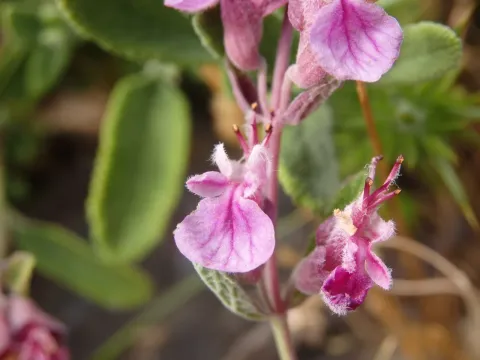
Teucrium salviastrum
Teucrium salviastrum
Teucrium salviastrum is typically propagated through seeds or vegetative division. Seeds are sown in early spring once soil temperatures reach 10-12 degrees Celsius to ensure steady germination.
What the section contains
Teucrium salviastrum
For greenhouse cultivation, sowing should begin in late winter to secure strong seedlings. The seeds require stratification to break dormancy and improve the overall germination rate significantly.
Given their small size, seeds should be sown at a shallow depth of approximately 0.5 to 1 cm. Adequate moisture must be maintained throughout the initial sprouting phase.
In field production, a spacing of 60-70 cm between rows is recommended. This layout allows for optimal plant development and facilitates the use of mechanical weeding equipment.
Vegetative propagation involves dividing mature rootstocks during the dormant season, which ensures faster establishment compared to direct seeding in larger commercial plots.
Belonging to the Lamiaceae family, Teucrium salviastrum is a perennial subshrub native to the Iberian Peninsula. It is highly adapted to sunny, Mediterranean environments.
The plant thrives in full sun exposure. Any significant shade will negatively impact the essential oil production and overall vigor of the plant, potentially leading to spindly growth.
Soil requirements focus primarily on drainage. It prefers light, sandy, or rocky limestone soils with a neutral to slightly alkaline pH. Waterlogged conditions are strictly prohibited.
The species is remarkably drought-tolerant once established. However, young plantations require consistent irrigation during their first year to support the development of a resilient root system.
It prefers climates with mild winters, though it can survive temporary cold snaps if the soil is well-drained and protected from cold, desiccating winds.
Fungal diseases are the primary threats to this crop, particularly root rot and powdery mildew. These issues often arise due to excessive humidity or poor soil drainage.
Common insect pests include aphids and spider mites, which feed on the sap of young leaves. If left unchecked, these can severely weaken the plant and reduce the yield quality.
Management strategies focus on preventive measures. Ensuring proper spacing for air circulation and avoiding overhead irrigation can significantly reduce the risk of pathogen outbreaks.
Weed control is essential, especially in young crops, as invasive vegetation competes for nutrients and keeps the microclimate around the plants too humid for comfort.
Regular monitoring for early signs of infection or infestation allows for prompt intervention, minimizing the need for extensive chemical treatments in organic-focused farming.
Harvesting should be timed to coincide with the peak flowering period. This is when the plant's secondary metabolites and volatile oils are at their highest concentration.
The upper 15-20 cm of the flowering stems are harvested using clean, sharp tools. Careful harvesting ensures the plant remains productive for subsequent seasons.
Post-harvest management involves immediate drying in a shaded, well-ventilated area. Keeping temperatures below 40 degrees Celsius prevents the evaporation of volatile aromatic compounds.
Once dried, the leaves and flowering tops are separated from the woody stems. High-quality yield is characterized by a strong, clean aroma and vibrant color retention.
Storage must be in cool, dry, and dark conditions using containers that prevent moisture absorption and maintain the integrity of the plant's active chemical profile.