
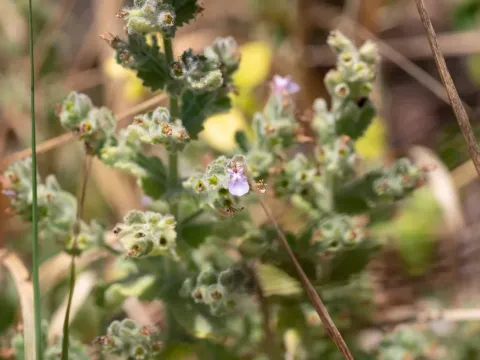
Teucrium scordioides
Teucrium scordioides
Sowing seeds of Teucrium scordioides in temperate climates should ideally be performed in early spring as soon as soil temperatures reach 8–10 degrees Celsius.
What the section contains
Teucrium scordioides
Late autumn sowing is also a viable option, allowing for natural stratification of the seeds, which often leads to more uniform germination in the following season.
For commercial cultivation, the transplanting method is preferred as it ensures optimal plant density and reduces early competition with fast-growing weeds.
When sowing directly into the field, seeds should be placed at a shallow depth of 0.5–1 cm, as they require precise moisture levels to trigger germination.
Standard spacing should account for the plant's spreading habit, with row distances of 45–60 cm and 20–30 cm between individual plants in the row.
Teucrium scordioides is a perennial herbaceous plant belonging to the Lamiaceae family, known for its distinct garlic-like scent when crushed.
The plant thrives in full sun, which is critical for maximizing the synthesis of essential oils and other secondary metabolites within the leaves and stems.
It prefers well-drained, light soils with a neutral or slightly alkaline pH; heavy, waterlogged clay soils should be avoided to prevent root diseases.
This species is highly drought-tolerant, exhibiting excellent resilience in dry periods, making it a suitable candidate for sustainable, low-water agriculture.
Despite its robustness, maintaining moderate soil moisture during the establishment phase is essential for developing a strong root system and ensuring vigorous growth.
The primary agricultural objective is the harvest of the aerial parts, which are widely valued in the pharmaceutical and herbal supplement industries.
With proper management, dry biomass yields can range from 15 to 25 quintals per hectare, depending on the age of the crop and environmental conditions.
Maximum productivity is typically achieved during the second and third years of growth, once the plants have established deep and extensive root systems.
The harvest contains a complex profile of tannins, essential oils, and flavonoids, which are processed into various medicinal tinctures and health products.
The economic value of the crop is sustained by the consistent demand for its anti-inflammatory and antiseptic properties in the herbal market.
Fungal pathogens such as powdery mildew represent a significant threat to the crop, particularly in high-humidity conditions or areas with poor air circulation.
Effective management includes maintaining proper spacing between plants and implementing strict crop rotation protocols to break the infection cycle in the soil.
Insects like aphids and spider mites may infest the crop during hot, dry spells, necessitating regular scouting to manage populations before they cause damage.
Weed control is vital in the first year of production; since Teucrium scordioides grows slowly initially, it can easily be overwhelmed by competitive weed species.
Using integrated pest management (IPM) practices, including biological controls, is highly recommended to ensure the harvest remains free of synthetic chemical residues.
The harvesting stage must coincide with full bloom, as this is when the concentration of essential active compounds is at its absolute peak in the tissues.
Mechanical harvesting equipment is used to cut the plants at a height of 5–10 cm above the ground, allowing for healthy regrowth and multiple potential cuttings.
Harvested material must be transported to the drying facility immediately to prevent fermentation, which can rapidly degrade the quality of the essential oils.
Drying should take place in shaded, well-ventilated areas or in temperature-controlled chambers kept below 40 degrees Celsius to preserve heat-sensitive compounds.
Once dried, the biomass is cleaned of debris, sorted, and packed into moisture-resistant containers to maintain stability and potency during long-term storage.