
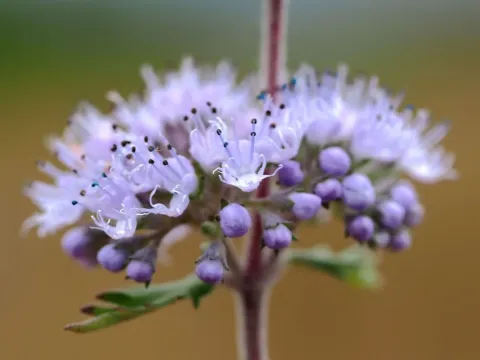
Bluebeard
Caryopteris Bunge
Bluebeard (Caryopteris Bunge) is a perennial deciduous subshrub belonging to the Lamiaceae family. Native to East Asia, including China and Japan, this plant has gained popularity in temperate gardens for its striking late-season blue or violet blooms.
What the section contains

Bluebeard
The plant thrives in full sun exposure. Adequate light is crucial for the development of strong, non-leggy stems and for maximizing the plant's nectar production, which makes it highly attractive to pollinators like bees and butterflies.
Soil requirements are centered on drainage. Bluebeard demands light, sandy or loamy soils with good aeration. It is extremely sensitive to waterlogged conditions, which often result in root rot during dormant winter months.
Climatic adaptability is moderate. While established plants demonstrate high drought tolerance, supplemental irrigation is recommended during the first growing season and prolonged dry spells to ensure robust development.
Agrotechnical management relies heavily on spring pruning. Because flowers are produced on current season growth, cutting the plant back hard in early spring encourages vigorous new shoots and more dense, attractive floral displays.
Bluebeard is generally considered a disease-resistant plant. However, site selection is the key factor in health; planting in heavy, poorly drained clay soils significantly increases the risk of fungal root diseases.
Aphids are the primary insect pest affecting this crop. They tend to cluster on tender new foliage and flower buds, causing stunted growth and potentially transmitting viral pathogens if the infestation is heavy.
Spider mites can become problematic during hot, arid summers. These pests are often difficult to detect until leaf yellowing or fine webbing becomes visible on the underside of the foliage.
Control strategies for pests include both cultural and chemical interventions. Regular inspection of the foliage and washing the plants with a pressurized stream of water can often mitigate minor pest populations.
To ensure plant longevity, winter protection such as organic mulch applied to the base is recommended in colder climates to prevent the roots from freezing too deeply, preserving the plant's vigor for the next spring season.