
White sage
Salvia apiana
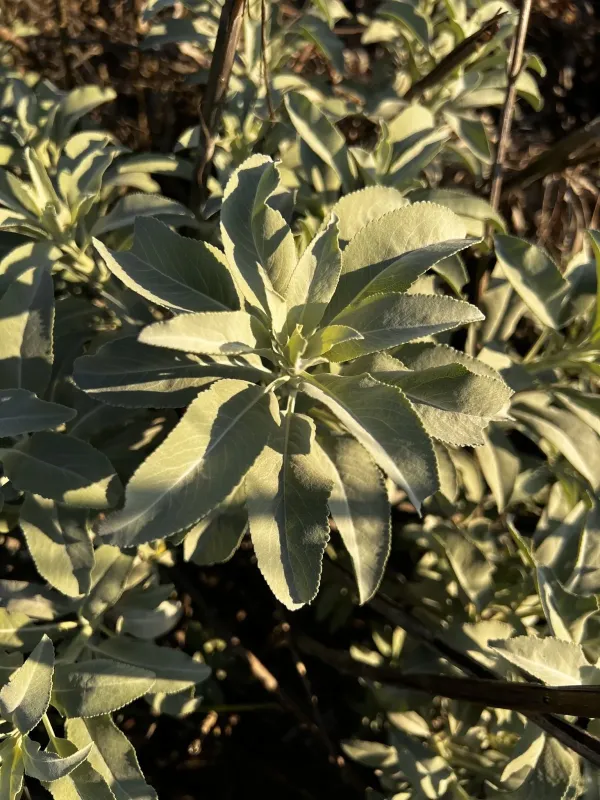
Description
Sowing dates
White sage (Salvia apiana) is typically propagated from seeds or cuttings. Seeds require cold stratification for about 30 to 60 days at approximately 4°C to break dormancy and improve germination rates.
For indoor propagation, sow seeds in late winter, about 8 to 10 weeks before the last expected frost, using a well-draining, sterile seed-starting mix.
Seeds must be surface-sown or covered only with a very thin layer of soil, as they require light to germinate effectively. Maintain a temperature range of 20°C to 25°C.
Transplanting to the final location should be delayed until all risks of frost have passed and the soil has sufficiently warmed up in the spring.
When sowing directly into the ground, ensure the site receives full sun and has a very loose, gritty structure to allow the root system to establish quickly.
Growing requirements
Belonging to the Lamiaceae family, Salvia apiana is a perennial shrub native to arid regions, specifically the coastal sage scrub of Southern California and Baja California.
The plant demands full sun exposure, ideally at least 6 to 8 hours of direct sunlight per day, to thrive and produce its characteristic aromatic oils.
Soil requirements are strict: the medium must be highly porous, rocky, or sandy with excellent drainage. Heavy, nutrient-rich, or water-retentive soils are detrimental.
Watering should be minimal. Once established, white sage is highly drought-tolerant; overwatering is the most common cause of plant failure in agricultural settings.
Optimal growth occurs in temperatures between 20°C and 35°C. It is hardy in warm-temperate climates but needs protection from extreme cold and constant high humidity.
Main diseases and pests
Root rot caused by Phytophthora or other water-borne pathogens is the primary threat, usually triggered by poor drainage or over-irrigation during dormant periods.
Powdery mildew can infect leaves if the plants are crowded, lack proper air circulation, or are subjected to persistently high humidity levels during the growing season.
Spider mites are common pests in hot, dry conditions, often colonizing the underside of the leaves and causing visible yellowing and tissue damage.
Aphids may target new succulent growth, potentially spreading viral pathogens, although this is less common than in other soft-tissue agricultural crops.
Integrated pest management is recommended, focusing on environmental control and avoiding broad-spectrum pesticides that could affect the aromatic quality of the harvest.
Harvesting
The primary harvest consists of the leaves, which are prized for their intense fragrance and traditional uses. Harvesting should ideally be done before the plant fully flowers.
Selective pruning using clean shears is recommended; never remove more than one-third of the plant at once to ensure the shrub remains vigorous and healthy.
Dry the harvested leaves in a well-ventilated, shaded area. Direct sunlight during the drying process should be avoided to preserve the silver-white color and oil potency.
If seeds are intended for collection, wait until the flower spikes turn brown and the seeds become loose in the calyx before carefully cutting the stems.
Proper storage in airtight containers away from moisture and direct light is essential to maintain the quality of the dried sage over an extended period.