
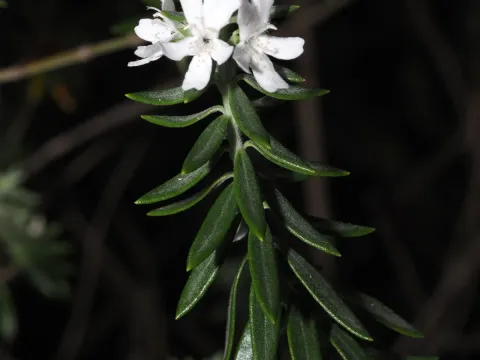
Westringia
Westringia Sm.
Westringia (Westringia Sm.) is a genus of evergreen shrubs belonging to the Lamiaceae family. Often referred to as Australian rosemary due to its leaf resemblance, it is a hardy, resilient plant native to diverse habitats across Australia.
What the section contains


Westringia
This crop thrives best in full sun exposure. While it can adapt to light shade, its habit becomes much denser and the flowering more prolific when the plant receives at least six to eight hours of direct sunlight every day.
Soil requirements are relatively specific: the plant demands well-draining, sandy or loamy soils. Drainage is the most important factor in its cultivation, as the roots are highly susceptible to rot if left in saturated or heavy, clay-based substrates.
Westringia is well-suited for Mediterranean and subtropical climates. It exhibits significant drought tolerance once fully established, making it an excellent choice for water-wise landscaping and sustainable xeriscaping projects.
In terms of agricultural and horticultural use, Westringia is widely utilized as a hedging plant. Its ability to tolerate frequent pruning makes it highly valuable for architectural landscaping, topiary, and ornamental border maintenance in temperate gardens.
The primary threats to Westringia are fungal pathogens, specifically those causing root and crown rots. These infections are almost always triggered by overwatering or poor drainage systems that prevent oxygen from reaching the root zone.
Pests that frequently infest this shrub include spider mites and mealybugs. These organisms thrive in sheltered, dry environments, particularly when plants are grown in pots or in locations with restricted airflow.
Proactive management includes routine sanitary pruning. Removing dense clusters of branches allows air to circulate through the canopy, which effectively reduces the humidity levels that fungi and pests prefer.
Nutritional deficiencies can manifest as chlorosis or stunted growth. Using slow-release fertilizers formulated for Australian natives is recommended, as these plants are sensitive to high levels of phosphorus and nitrogen commonly found in generic products.
Monitoring the plants throughout the changing seasons is vital. During winter, especially in non-native climates, protecting the foliage from frost and maintaining a dry root zone are the most effective strategies to ensure plant longevity.