
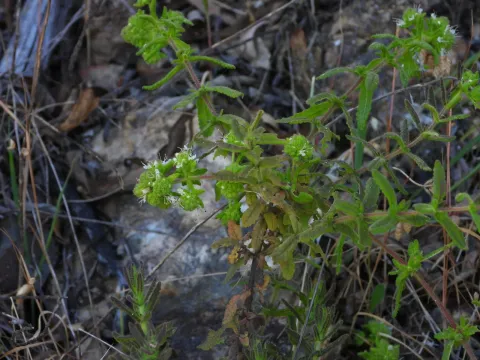
Teucrium haenseleri
Teucrium haenseleri
Teucrium haenseleri, commonly known as a species of germander, belongs to the Lamiaceae family. This perennial subshrub is native to the mountainous regions of Southern Spain, where it has evolved to thrive in dry and rocky calcareous environments.
What the section contains
Teucrium haenseleri
The plant is a typical xerophyte, requiring full sun exposure to maintain its metabolic health. Sunlight is a critical factor, as it directly influences the biosynthesis of the secondary metabolites, including essential oils, for which the plant is commercially harvested.
Regarding soil requirements, the culture demands excellent drainage. Stony, alkaline, or sandy substrates are ideal to prevent the accumulation of moisture, which the plant is highly sensitive to. Avoiding waterlogging is the most important aspect of site selection.
The climate preference leans toward Mediterranean conditions with warm, dry summers and mild winters. While it is hardy in arid zones, young plants require a specific irrigation regime during the establishment phase to develop a robust root system capable of subsequent self-sufficiency.
Commercially, Teucrium haenseleri is valued for its pharmacological potential and its utility in the fragrance industry. Its botanical structure, characterized by hairy leaves and aromatic flowers, makes it an interesting candidate for specialized essential oil production.
Root rot caused by Oomycetes, specifically Pythium and Phytophthora, constitutes the primary biological threat to Teucrium haenseleri crops. These pathogens emerge rapidly in compacted or poorly drained soils.
Foliar diseases, particularly powdery mildew, pose a significant risk during periods of high atmospheric humidity or when plant spacing is too dense. Proper ventilation and airflow within the canopy are essential preventive measures against fungal proliferation.
Insect pests, including aphids and spider mites, can cause severe damage during the vegetative stage. These pests weaken the plant by feeding on phloem sap, which ultimately results in diminished biomass and reduced oil quality.
Nematodes are a latent threat in monoculture systems. To mitigate this risk, farmers must employ rotation strategies or use fallow periods to reduce the soil inoculum pressure before replanting the field.
Integrated pest management (IPM) is highly recommended for this crop to ensure product safety. The use of biological controls, such as predatory insects and organic fungicides, is preferred over synthetic chemicals to maintain the high quality required for medicinal and cosmetic applications.