
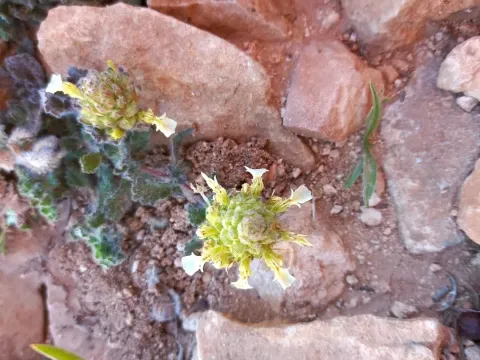
Teucrium compactum
Teucrium compactum
Teucrium compactum, commonly known as a species of compact germander, is a perennial plant belonging to the Lamiaceae family. Native primarily to the arid regions of Turkey, it has evolved to thrive in rocky environments and nutrient-poor soils, establishing itself as a resilient xerophytic crop.
What the section contains
Teucrium compactum
The plant features a distinct compact growth habit with small, pubescent leaves designed to conserve water in harsh conditions. Agronomically, it requires full sun exposure to maintain its dense structure and prevent the physiological etiolation that occurs in low-light environments, which can compromise the plant's health.
Soil drainage is the most critical factor for successful cultivation. The species requires porous, well-aerated substrates, ideally with a calcareous composition. Growers must avoid heavy, water-retentive soils, as persistent moisture around the root zone frequently leads to root rot and premature plant death.
Climatic requirements involve moderate to warm temperatures during the growing season and a period of relative dryness during the winter dormancy. While the plant is drought-tolerant once established, young seedlings require consistent, albeit light, irrigation to ensure proper root development before the first season of full heat.
In terms of economic use, Teucrium compactum is highly valued in pharmaceutical research for its essential oil content and in landscape design for water-wise gardening. Its ability to maintain a consistent shape and provide a long flowering season makes it a sustainable choice for xeriscaping and biodiversity-focused agriculture.
Pathogenic threats are primarily associated with fungal infections such as powdery mildew and root rot, which are exacerbated by high humidity levels or poor air circulation. Regular pruning to improve canopy airflow is a recommended practice to mitigate these risks and maintain plantation longevity.