
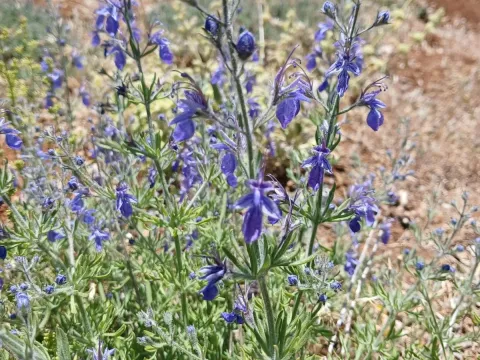
Teucrium orientale
Teucrium orientale
The sowing of Teucrium orientale is typically carried out in late autumn or early spring, as soon as the soil warms up to 5-8 degrees Celsius. The seeds have high viability, but spring sowing requires cold stratification for uniform germination.
What the section contains
Teucrium orientale
The seeds are sown at a shallow depth of 0.5-1 cm because they are very small. It is recommended to mix them with sand or peat in a 1:3 ratio to ensure even distribution during the sowing process.
Row spacing should be maintained at 45-60 cm to allow for proper weed control and plant development. In intensive farming systems, ribbon sowing with 30 cm spacing may be employed.
The optimal plant density is between 150,000 and 200,000 plants per hectare. This density ensures an optimal yield of vegetative mass for commercial extraction purposes.
For vegetative propagation, division of the root system is best performed in autumn. This allows the plants to establish well before the intense heat of the following summer season.
Teucrium orientale is a perennial herbaceous plant of the Lamiaceae family. It is naturally adapted to arid conditions and requires open, sunny locations to thrive and produce high-quality essential oils.
The crop is not demanding regarding soil fertility, but it performs best in light, well-drained sandy loam or loamy soils with a neutral or slightly alkaline pH level.
Proper drainage is the most critical requirement, as stagnant water in the root zone quickly leads to root rot. On heavy clay soils, amendments like gravel or coarse sand are necessary.
The plant is highly drought-tolerant and heat-resistant, making it suitable for rocky or marginal lands. Established plants can tolerate frost down to -25 degrees Celsius if protected by snow.
Agricultural management is minimal, focusing on occasional mineral fertilization, particularly with phosphorus and potassium, to enhance immune response and winter hardiness.
The yield of green mass is heavily dependent on the season's weather conditions and soil quality. On average, a hectare of plantation can produce 3 to 5 tons of air-dried raw material.
The peak concentration of biologically active compounds occurs during the start of the full flowering phase. Therefore, timing the harvest correctly is essential for quality.
A well-maintained plantation can remain productive for 5 to 7 years. Regular weeding and mineral top-dressing are key factors in maintaining these long-term production cycles.
Growth in the first year after sowing is slow as the plant focuses on root system development. Commercial harvests are typically expected starting from the second year of cultivation.
The crop is utilized in the pharmacological industry and the production of aromatic oils. Its secondary metabolites provide antiseptic and astringent properties, making it valuable for medicinal use.
The primary threats include fungal diseases caused by excessive soil or atmospheric moisture. Powdery mildew can affect the foliage during periods of high humidity and temperature fluctuations.
Root rot is the most dangerous condition for this crop, usually triggered by poor drainage or overwatering. Maintaining a proper crop rotation and avoiding low-lying areas is the best prevention.
Insect pests, such as aphids, may damage young shoots in the spring. In cases of severe infestation, the use of biological insecticides is recommended to minimize impact on plant health.
Weed competition is a significant threat during the first year of growth. If not managed, weeds can easily outcompete the slow-growing Teucrium seedlings for light and nutrients.
Spider mites can become an issue during prolonged hot and dry periods. Regular field inspections allow for early detection and the localization of infestation hotspots.
Harvesting is performed during the early full bloom phase by cutting the upper 15-20 cm of the stems. It is crucial to work during dry, sunny weather to prevent spoilage of the raw material.
Mechanized mowers can be used for harvesting, provided the cutting height is set to at least 10 cm above the ground to ensure successful regeneration of the plant for future seasons.
After harvesting, the material should be transported immediately to a drying facility. The best results are achieved in shaded, well-ventilated areas shielded from direct sunlight.
Drying temperatures must not exceed 40 degrees Celsius. Excessive heat leads to the loss of volatile essential oils, significantly reducing the market value and medicinal efficacy of the harvest.
Finished products should be stored in a cool, dry place in airtight containers. Proper storage conditions maintain the quality and aromatic profile of the dried herb for up to 2 years.