
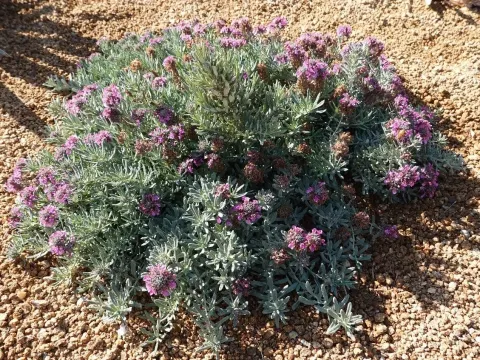
Teucrium aroanium
Teucrium aroanium
Teucrium aroanium, commonly known as mountain germander, is a low-growing perennial subshrub belonging to the Lamiaceae family. It is prized by gardeners for its silver-hued, felted foliage and delicate purple-pink flowers that bloom during the summer months.
What the section contains
Teucrium aroanium
Originating from the mountainous regions of Greece, this species is naturally adapted to limestone cliffs and rocky scree slopes. It thrives in harsh environments where it faces full sun, high exposure, and nutrient-poor, gritty soils.
In a horticultural setting, the primary requirement for success is perfect soil drainage. Teucrium aroanium cannot tolerate "wet feet," meaning that sandy or gravelly soils are ideal for preventing root rot, which is the most common cause of failure for this species.
This plant is highly drought-tolerant once established and requires minimal irrigation. It performs best in neutral to alkaline soils, reflecting its native calcareous habitat. Avoid fertilizing the plants, as excessive nutrients can result in lush, leggy growth that is less hardy.
Landscaping applications include its use as an attractive groundcover in rock gardens, gravel beds, or alpine troughs. Its tidy, mound-forming habit makes it a low-maintenance choice for dry Mediterranean-style landscapes.
The greatest threat to the health of Teucrium aroanium is over-watering or poor drainage. Excess humidity around the crown of the plant during the winter months often leads to root fungal infections and sudden death of the plant.
Powdery mildew may occur if the plants are situated in areas with stagnant air or high humidity levels. Ensuring proper spacing between plants and allowing for good airflow is essential to keep the foliage dry and disease-free throughout the growing season.
While the plant is generally resistant to most insect pests due to its aromatic volatile oils, aphid infestations can occur on young, tender growth during spring. Manual removal or a gentle insecticidal soap can be used if an outbreak occurs.
To maintain plant vigor, annual pruning is recommended after flowering. This practice not only keeps the plant compact and dense but also removes any dead or damaged stems where fungal spores might otherwise accumulate and overwinter.
No specific soil-borne pests are majorly linked to this species, provided the soil is properly drained. By mimicking its native mountain conditions, the grower can eliminate nearly all significant threats to this resilient and beautiful perennial.