
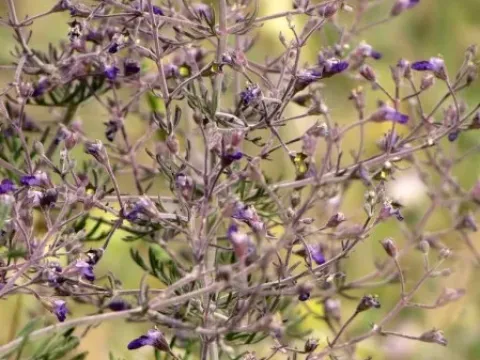
Teucrium parviflorum
Teucrium parviflorum
Teucrium parviflorum, a member of the Lamiaceae family, is a hardy perennial herb native to rocky mountain landscapes. It is well-adapted to environments where poor, calcareous soils and high solar radiation are the norm, making it a robust species for specialized cultivation.
What the section contains
Teucrium parviflorum
The plant demands excellent drainage. In agricultural settings, it is crucial to avoid waterlogged areas, as the species is highly prone to root rot when moisture persists in the root zone. Planting on raised beds or slopes is recommended to facilitate optimal water management.
Teucrium parviflorum thrives in full sunlight. Insufficient light exposure will result in leggy growth and a significant reduction in the synthesis of essential oils, which are the primary value drivers for this crop in pharmaceutical and cosmetic industries.
It prefers alkaline to neutral soil pH. The presence of calcium in the soil profile supports the structural integrity of the stems and enhances the plant's resistance to environmental stress. Heavy clay soils should be amended with grit or coarse sand before planting.
Temperature tolerance is a hallmark of this species. While it is adapted to cool mountain air, it also handles summer heat well provided that the soil temperature does not reach extremes. Mulching can help stabilize soil temperature and retain essential moisture during dry spells.
Propagation of Teucrium parviflorum is typically performed via seed or stem cuttings. Seeds have a low germination rate if not stratified; therefore, a cold stratification process lasting at least four to six weeks is strongly recommended before sowing.
Direct sowing in the field should take place during early spring once the danger of hard frost has passed. Seeds are extremely small and should be sown at a depth of no more than 0.5 cm. A light covering of vermiculite or fine sand is sufficient to hold the seeds in place.
For commercial farming, indoor nursery propagation is superior to direct seeding. Sowing in trays during late winter allows for stronger, more uniform seedlings that can be transplanted once the local environment reaches stable spring temperatures.
Plant spacing should be approximately 45–50 cm between rows to ensure adequate airflow. Good ventilation between plants is vital to prevent fungal outbreaks, which are common in dense, poorly spaced plantations of this genus.
Initial irrigation must be gentle and controlled to avoid dislodging the seeds or damaging the fragile root systems of young seedlings. Once established, the plants become quite drought-tolerant, requiring irrigation only during prolonged absence of rain.
The yield of Teucrium parviflorum is highly dependent on the density of the planting and the age of the stand. On average, a well-managed plantation can produce between 1.5 to 2.5 tonnes of dried herb per hectare under optimal conditions.
The harvest cycle usually peaks in the second and third years. After the third year, plants may show signs of woody stem proliferation, which can decrease the overall quality of the harvest. Implementing a staggered planting schedule is recommended for constant production.
Biomass production is supported by moderate fertilization, primarily with phosphorus and potassium. Excessive nitrogen application should be avoided as it stimulates vegetative growth at the expense of secondary metabolites, specifically essential oils.
Regular pruning of the plants after the primary harvest encourages new, succulent growth. This practice is essential for maximizing yield in subsequent seasons and keeping the plants in a juvenile, high-productivity state for as long as possible.
Strategic harvesting based on the flowering stage is the most important factor in determining the value of the yield. Plants harvested too late will have a high percentage of lignified stems and a lower concentration of active compounds.
Root and crown rots are the most significant threats to Teucrium parviflorum. These are usually caused by pathogens like Phytophthora or Rhizoctonia, thriving in soils with poor drainage. Proactive drainage management is the primary defense strategy.
Powdery mildew is a common foliar problem, especially in humid or stagnant air conditions. Improving airflow and reducing plant density are the first steps to control this pathogen, often making chemical intervention unnecessary if the spacing is managed well.
Aphids and spider mites are frequent pests during the hot, dry parts of the growing season. They target the succulent tips of the stems, causing stunted growth and leaves chlorosis. Integrated pest management using insecticidal soaps is effective for these pests.
Root-knot nematodes can cause severe damage in soils where similar crops have been grown previously. Crop rotation, incorporating non-host species, is essential to minimize the buildup of nematode populations in the soil.
Monitoring the field for symptoms of disease, such as wilting during the cooler parts of the day or yellowing of the lower leaves, is critical. Early identification and immediate removal of affected plants can prevent the spread of soil-borne pathogens throughout the field.
Harvesting should occur on a dry, sunny morning after the dew has evaporated. Using mechanical harvesting equipment, such as sickle-bar mowers, is common for large-scale operations, ensuring a clean cut that prevents stem fraying.
Immediate drying is non-negotiable for preserving product quality. Harvested biomass should be spread thin in a well-ventilated, shaded facility. Exposure to direct sunlight must be prevented to avoid the degradation of sensitive essential oil compounds.
Drying temperatures must be kept strictly below 40 degrees Celsius. Excessive heat causes the evaporation of the volatile aromatic compounds, significantly reducing the potency and the market value of the final herb product.
Once dried to a moisture content of roughly 10–12%, the leaves should be stripped from the stems using automated stripping machinery. The resulting material is then sifted to remove coarse debris and dust before packaging.
Storage should be in moisture-proof containers in a cool, dark room. Properly stored material can maintain its quality for over 12 months, allowing producers to supply the market consistently throughout the year.