
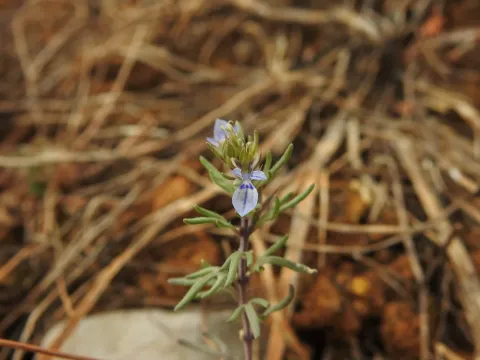
Teucrium aristatum
Teucrium aristatum
Teucrium aristatum is a member of the Lamiaceae family. It is a perennial herbaceous plant known for its adaptability to arid, rocky environments where drainage is excellent and nutrient competition is relatively low.
What the section contains
Teucrium aristatum
The plant thrives in full sun exposure and requires a Mediterranean-like climate to reach its full potential. High levels of solar radiation are essential for the synthesis of secondary metabolites within the plant tissues.
Soil requirements focus primarily on drainage. The species cannot tolerate waterlogging, which quickly causes root rot. A sandy or gravel-heavy soil structure with a near-neutral pH is ideal for promoting healthy root development.
Agronomic management involves minimal irrigation once the plants are established. Water should be applied only during extreme drought periods. Mulching may be used to suppress weeds and maintain soil temperature stability during the initial growth phase.
In terms of usage, the plant is primarily harvested for its essential oil content, which has applications in the cosmetic and pharmaceutical industries. Its resilience makes it an excellent choice for xeriscaping and sustainable agriculture projects.
Fungal pathogens remain the primary threat to Teucrium aristatum, especially in humid regions. Powdery mildew can rapidly spread if air circulation around the plants is obstructed, leading to significant foliage damage.
Root rot, caused by various oomycetes, is the most destructive issue when soil moisture exceeds the plant's tolerance. Ensuring high-quality drainage is the most effective defense strategy against this threat.
Common insect pests include aphids and mites, which are particularly active in warm, dry weather. These pests can weaken the plant by feeding on sap, reducing the overall biomass and essential oil yield at harvest.
Integrated pest management strategies should emphasize manual removal and the use of botanical insecticides. Chemical intervention is rarely required if proper site selection and spacing are maintained from the beginning.
Maintaining a clean, weed-free environment is crucial for preventing the spread of diseases and pests. Routine inspection of the lower leaf surfaces can help identify potential infestations before they escalate into full-scale outbreaks.