
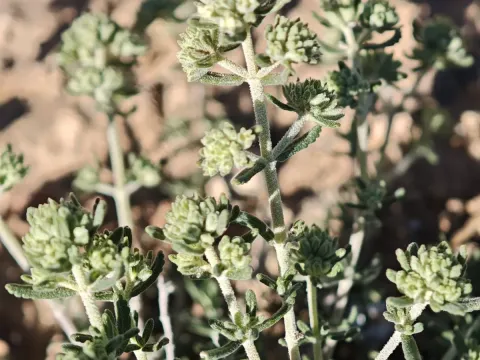
Teucrium capitatum
Teucrium capitatum
The sowing of Teucrium capitatum is best performed in the early spring, once the soil has warmed to a consistent temperature. Due to the small size of the seeds, they are typically sown in greenhouse trays to ensure uniform germination before being transplanted to the field.
What the section contains
Teucrium capitatum
Field preparation involves creating a loose, well-draining seedbed. Because this species is adapted to rocky environments, it thrives when the soil structure allows for rapid water drainage and deep root penetration without compaction.
Seed depth should remain minimal, approximately 0.5 centimeters, as the seeds require a degree of light exposure to trigger biological dormancy breaking. Proper soil moisture management is essential during the initial germination phase.
Transplanting to the final location is carried out when plants reach sufficient vigor, typically with 4–6 true leaves. Spacing should be approximately 40 centimeters between rows to allow for mechanical weed control and air circulation.
For large-scale cultivation, direct drilling is possible only in well-structured soils that are free of competing weeds. Using coated seeds can significantly improve the establishment rate in challenging field environments.
Teucrium capitatum is a heliophilous species that requires full sun exposure to develop its characteristic aromatic profile. Inadequate light conditions result in poor volatile oil production and weaker plant stems.
The soil requirements are specific: the species prefers alkaline to neutral, stony, or sandy soils. It is highly intolerant of waterlogging, which rapidly promotes root pathogens and leads to plant mortality.
This crop is exceptionally drought-tolerant once established. However, during the early vegetative phase, supplemental irrigation may be necessary to ensure the survival and development of the root system.
Nutrient requirements are relatively low compared to intensive crops. Excessive fertilization with nitrogen encourages vegetative growth at the expense of aromatic compound concentration and winter hardiness.
Maintaining proper soil aeration is crucial. Periodic inter-row cultivation is recommended not only to control weeds but also to prevent the formation of a surface crust that hinders gas exchange with the roots.
The primary threats to this crop are fungal infections such as Rhizoctonia and Fusarium, which are typically triggered by poorly drained soils or high humidity. These conditions must be mitigated through precise irrigation management.
Insect pests are generally not a major concern due to the high content of bitter principles and essential oils in the plant tissue. Occasionally, aphids may attack young, tender shoots, which can be managed with biological soaps.
Maintaining a good distance between plants is the best strategy for disease prevention. Dense plantings create microclimates with high humidity, which significantly increases the risk of mold and fungal attacks.
Sanitation practices are essential for long-term production. Removing infected plant parts and ensuring debris-free fields after harvest prevents the overwintering of pathogens that could affect the next season.
Crop rotation is recommended to prevent the buildup of soil-borne pathogens. A minimum three-year gap between planting this species on the same ground is considered optimal practice in professional herb production.
Harvesting should be synchronized with the peak flowering period, as this is when the density of the essential oils in the aerial parts is at its maximum. This timing is critical for obtaining high-quality commercial yields.
Mechanical harvesting equipment should be calibrated to cut the plants at the appropriate height, typically leaving enough of the base to facilitate rapid regrowth. This ensures the longevity of the perennial crop.
Prompt post-harvest processing is required. The material must be moved immediately to drying facilities to prevent heat buildup and the volatilization of valuable essential oils, which can occur very rapidly.
Drying should be carried out in shaded, ventilated environments or modern industrial dryers at a controlled temperature of 35–40 degrees Celsius. This ensures the retention of the plant's natural color and medicinal properties.
Once dried to the desired moisture level, the raw material should be stored in cool, dark, and dry conditions. Proper packaging in air-tight, light-shielded containers maintains the quality for extended periods of storage.