
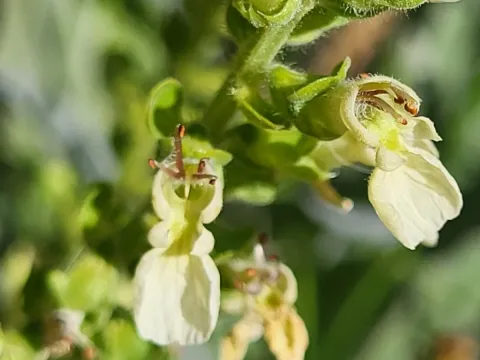
Teucrium francoi
Teucrium francoi
Teucrium francoi, a member of the Lamiaceae family, requires specific conditions for successful propagation. In its natural habitat, seeds typically undergo a period of winter stratification, which is essential for breaking dormancy and triggering germination in the spring.
What the section contains
Teucrium francoi
For agricultural cultivation, seeds should be sown in autumn or early spring, ensuring they are placed in a well-draining substrate. Shallow sowing, at a depth of no more than one centimeter, is recommended as the seeds are light-dependent for germination.
Controlled germination in greenhouse conditions often yields better results than direct field sowing. Maintaining a steady temperature between 12 and 15 degrees Celsius helps in achieving a more uniform emergence of seedlings.
Seedlings should be transplanted to their permanent locations once they have developed several true leaves and the threat of frost has completely passed. Proper spacing is crucial to allow the plants to develop strong root systems without competition.
Using a mix of sand and compost in the nursery beds can improve soil structure and facilitate easier transplanting later in the season. Consistent moisture during the early growth stages is vital until the plants establish their deep root system.
This plant species thrives in sunny, open environments, reflecting its evolutionary adaptation to rocky or mountainous terrains. It prefers alkaline soils, particularly those rich in limestone, which provide the necessary minerals for healthy growth.
Teucrium francoi is remarkably drought-tolerant, making it an excellent candidate for regions with limited water availability. However, it is highly sensitive to waterlogging; therefore, excellent drainage is non-negotiable to prevent root rot.
The climate requirements include high solar exposure and well-ventilated areas. During the winter, the plants benefit from protective measures, such as mulching with stone or gravel, to keep the crown of the plant dry and prevent freezing damage.
Fertilization should be handled with caution, as high levels of nitrogen can stimulate excessive foliage growth at the expense of aromatic oil concentration. Potassium-based fertilizers are generally preferred to enhance the structural integrity and cold tolerance of the plant.
Weed management should be conducted manually to avoid damaging the shallow root system. A layer of inorganic mulch around the base of the plant helps suppress weeds while maintaining the soil's alkaline balance.
Root rot is the most significant threat to Teucrium francoi, typically appearing in conditions of excessive soil moisture or poor drainage. Infected plants display yellowing foliage and wilting, often leading to rapid decline if the environment remains wet.
Powdery mildew may occur if air circulation is inadequate or if humidity levels remain too high for extended periods. Pruning the foliage to open up the canopy can significantly reduce the risk of this fungal issue.
Pests such as spider mites can infest the foliage during particularly hot and dry weather. Regular monitoring and the application of biological soap sprays are recommended as the first line of defense to keep the plant healthy.
Gastropods like slugs and snails may graze on young shoots during the spring. Implementing physical barriers around young plants can effectively discourage these pests without the need for harsh chemicals.
Maintaining high plant hygiene, including the removal of dead or decaying parts, helps prevent the onset of various bacterial and fungal infections that could compromise the crop's yield.
Harvesting for essential oil production or medicinal use should occur during peak bloom, when the concentration of bioactive compounds in the stems and leaves is at its highest. Timing is critical for the quality of the final product.
The stems are typically harvested by cutting the upper 15-20 centimeters of the plant. It is essential to ensure that a significant portion of the vegetative mass remains to allow the plant to recover and photosynthesize for future growth.
The harvested material must be dried in a shaded, well-ventilated area to protect the volatile oils from degradation. Temperatures during the drying process should be carefully monitored to stay below 40 degrees Celsius.
Once fully dried, the product should be stored in airtight containers away from direct sunlight and humidity. Proper storage ensures that the aromatic properties are maintained for an extended shelf life of up to two years.
Teucrium francoi serves various utility purposes, ranging from being a source of raw materials for the pharmaceutical industry to being a popular choice for drought-tolerant landscaping in rock gardens.