
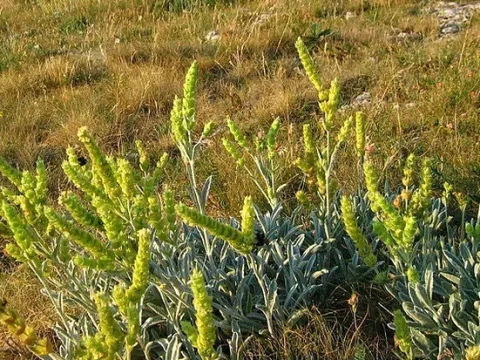
Ironwort
Sideritis taurica
Sowing Sideritis taurica is best performed in early spring as soon as soil temperatures reach 10-12 degrees Celsius. Since the seeds have a dormant period, autumn sowing is also a viable option, allowing natural stratification during the winter months.
What the section contains
Ironwort
Seeds are extremely small, necessitating a shallow sowing depth of about 0.5 to 1 centimeter. For optimal germination, it is crucial to maintain moisture in the seedbed without creating a waterlogged environment that could encourage fungal development.
In commercial cultivation, precision drills are recommended to ensure uniform spacing, with rows typically spaced 50-60 centimeters apart. This spacing facilitates mechanical weeding and ensures adequate airflow between plants to prevent diseases.
Seedlings emerge slowly, often requiring 2-3 weeks to establish. During this initial stage, it is vital to keep the beds clear of weeds, as the slow-growing ironwort seedlings are easily outcompeted by more aggressive invasive species.
Once established, the plants form a sturdy basal rosette and can thrive for many years. Thinning should be performed to maintain a distance of 25 centimeters between individual plants to ensure robust growth and higher floral production.
Sideritis taurica is a hardy member of the Lamiaceae family, perfectly adapted to arid and semi-arid environments. It thrives in full sun, requiring at least 6-8 hours of direct sunlight daily to maximize the synthesis of secondary metabolites.
The plant prefers well-drained, porous soils with a neutral to slightly alkaline pH. Sandy or rocky substrates are ideal, as they prevent water stagnation, which is the primary cause of root rot and plant mortality in cultivation.
This species is exceptionally drought-tolerant once it has developed its deep root system. Irrigation should be minimal, focused only on periods of extreme drought or during the initial establishment phase to encourage deep root penetration.
The plant exhibits remarkable cold tolerance, surviving sub-zero temperatures throughout the winter. It does not require artificial protection, making it an excellent candidate for low-input farming in temperate and continental climate zones.
Fertilization is rarely necessary, as excess nitrogen can actually decrease the medicinal quality of the plant. A balanced, low-concentration fertilizer may be applied during the early spring to stimulate biomass production if the soil is extremely depleted.
Root rot is the most significant threat to ironwort plantations, almost exclusively caused by over-irrigation or poorly drained soil. Symptoms include wilting, discolored foliage, and the eventual collapse of the entire plant structure.
Powdery mildew can occur in overly humid conditions or when planting density is too high. Proper spacing and selection of well-ventilated, elevated sites are the primary cultural practices used to prevent fungal outbreaks in the field.
Pest pressure is generally low, though aphids may colonize tender flower spikes during the spring flush. Caterpillars of certain lepidoptera species may occasionally feed on the leaves, though significant damage is rarely observed in healthy, resilient stands.
Integrated Pest Management (IPM) strategies are preferred over chemical interventions. Regular field monitoring and the removal of severely affected plants help keep the population of pests below an economic damage threshold.
Maintaining strong, vigorous plants through appropriate cultural conditions is the best defense against both diseases and pests. A stressed plant, particularly one subjected to waterlogging, will always be more susceptible to secondary infections.
Harvesting should occur at the peak of full bloom when the flowers are fully expanded and the volatile oil content is at its highest. This timing is critical for ensuring the highest pharmaceutical and organoleptic quality of the harvest.
Stems are cut manually with sickles or mechanically harvested at a height of 10 centimeters above the ground. Harvesting must only be performed on dry, sunny days to ensure that moisture content remains low, reducing the risk of spoilage.
Post-harvest processing is immediate; the plant material must be spread in thin layers in a shaded, well-ventilated space. Slow drying in the shade preserves the aromatic profile and the vibrant green color of the leaves and stems.
Once the material is brittle, the drying process is complete. The harvested herbs are then screened to remove dirt, coarse stems, and any debris, ensuring a clean and high-quality final product ready for market or extraction.
Storage is performed in breathable containers such as paper bags or jute sacks in a cool, dark, and dry warehouse. Under these conditions, the product maintains its chemical integrity and potent properties for up to two years.