
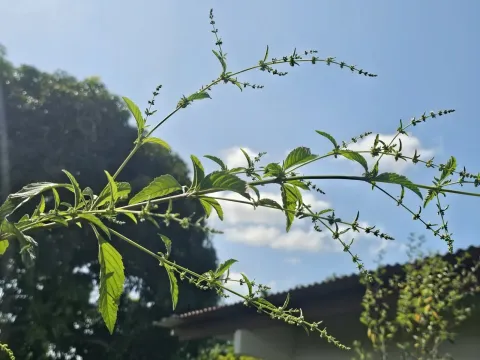
Hyptis verticillata
Hyptis verticillata
Hyptis verticillata, commonly known as false lavender or bushy mint, is a perennial shrub belonging to the Lamiaceae family. It is native to the tropical regions of Central and South America and the Caribbean, where it grows as a robust and resilient wild plant.
What the section contains
Hyptis verticillata
The plant is characterized by its verticillate (whorled) inflorescences, from which it derives its specific epithet. It typically reaches heights of 1 to 3 meters, featuring erect, woody stems and lanceolate leaves that release a distinctive scent when crushed.
Regarding climate requirements, this species thrives in tropical environments with high ambient temperatures and consistent moisture levels. It is highly sensitive to frost, which limits its commercial cultivation primarily to frost-free tropical and subtropical zones.
The crop prefers well-draining soils with a medium texture, such as sandy loams. While it shows some tolerance to soil variations, it performs best in soils with high organic matter content and a pH ranging from 6.0 to 7.0, ensuring optimal nutrient availability for leaf production.
In terms of management, the plant requires full sun exposure to maximize the accumulation of active phytochemical compounds. Proper spacing is essential to ensure adequate air circulation and to prevent the development of high-humidity-related pathogens within the canopy.
Root rot is the most common pathology affecting the plant, especially in areas with poor drainage. Providing a raised bed system or improving soil structure can significantly mitigate these risks during the rainy season.
Aphids and spider mites are typical insect pests that attack the foliage. Integrated Pest Management (IPM) strategies, including the use of neem-based oils or beneficial predatory insects, are often effective in maintaining population levels below the economic threshold.
Fungal diseases like leaf spot may occur under conditions of excessive humidity. Removing infected plant parts and applying appropriate cultural practices, such as ensuring sufficient space between rows, are primary methods for disease containment.
Competition from aggressive invasive weeds can suppress Hyptis verticillata in the early growth stages. Manual or mechanical weed control is recommended until the crop reaches a height that allows it to outcompete other local vegetation.
While the plant is quite hardy, physical damage to the stems from machinery can lead to secondary infections. Careful field operations and tool sterilization help maintain plant vigor and prevent the spread of soil-borne pathogens.