
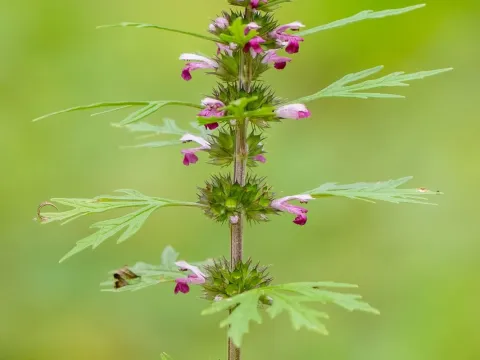
Japanese motherwort
Leonurus japonicus
Japanese motherwort (Leonurus japonicus) is an annual or biennial herbaceous plant belonging to the Lamiaceae family. Sowing is typically carried out in early spring when soil temperatures reach 8–10 degrees Celsius to avoid early frost damage and support vigorous initial growth.
What the section contains
Japanese motherwort
Seeds should be planted at a shallow depth of 1–2 centimeters to ensure optimal emergence. Row spacing is generally kept between 45 and 60 centimeters, providing enough space for mechanized weeding and aeration of the soil during the plant's development phases.
In regions with mild winters, autumn or late winter sowing is possible, allowing the plants to utilize spring soil moisture for an early growth start. However, this requires careful field preparation to manage weed pressure before the main growing season begins.
The seeding rate varies based on seed viability but typically ranges from 5 to 8 kilograms per hectare. Proper soil compaction after sowing is essential to ensure adequate seed-to-soil contact, which significantly improves the uniformity of the plant stand.
The plant grows rapidly through a rosette stage, transitioning into a tall flowering stem. By timing the sowing correctly, growers can synchronize the peak biomass production with the most favorable climatic window for the specific region.
This crop thrives in sunny locations with moderate rainfall. It is particularly responsive to long daylight hours, which stimulate the vegetative growth and the development of the secondary metabolites required for its medicinal applications.
Japanese motherwort is quite adaptable to different soil types, provided they are well-drained. Loamy and sandy loam soils with a pH between 6.0 and 7.5 are considered ideal for maintaining high productivity and plant health.
Fertilization management is crucial, as the plant requires sufficient nitrogen in the early growth stages to build vegetative mass. Excessive nitrogen application during the flowering phase, however, should be avoided to ensure the quality of active components remains high.
Regular cultivation between rows is necessary to prevent weed competition, which can be severe during the first month of growth. Keeping the soil loose also helps retain moisture and allows the roots to breathe, preventing waterlogging and potential root issues.
While the plant is relatively drought-tolerant once established, supplemental irrigation during prolonged dry spells is recommended to maximize the total biomass yield. Proper water management prevents the plants from flowering prematurely due to heat stress.
The primary economic focus for Japanese motherwort is the harvest of its aerial parts, which are widely used in traditional medicine. Harvesting should be performed at the peak of the flowering stage, when the concentrations of active medicinal compounds are at their highest.
Yields of dry biomass generally range between 2 and 3 tons per hectare under well-managed agricultural conditions. Delayed harvesting results in lignified stems and a significant decline in the pharmacological value of the raw material.
Post-harvest drying is a critical step that must be performed under shade or in temperature-controlled drying facilities below 45 degrees Celsius. This preserves the plant's natural green color and prevents the degradation of light-sensitive medicinal components.
Stored raw materials should be kept in cool, dry, and well-ventilated areas to prevent mold growth or quality deterioration. Careful cleaning of the raw material is required to meet industrial standards for herbal ingredients.
Given the global demand for plant-based medicinal products, Japanese motherwort provides a stable value proposition for herbal farmers. Efficiency can be further improved through mechanized harvesting techniques that allow for high-throughput production.
Leaf spots caused by fungal pathogens are the most common diseases, especially in environments with high humidity and poor air circulation. Crop rotation and keeping the canopy sparse are effective preventive measures for managing these threats.
Root rot can occur in poorly drained soils or during periods of excessive rainfall. To mitigate this risk, farmers should ensure fields are adequately sloped and avoid over-irrigating during the late growth stages when the plants are less active.
Aphids and various bug species represent the primary insect threats to Japanese motherwort. They cause damage by sucking sap from the tender parts of the plant, which may stunt development and introduce viral infections that harm quality.
Leaf-eating insects can also cause significant damage during dry, hot weather. Integrated pest management, including the use of bio-insecticides when necessary, is recommended to protect the crop while maintaining the integrity of the medicinal product.
Regular field scouting is essential for the early detection of any biological issues. By implementing proactive measures like sanitation and appropriate spacing, growers can maintain a healthy and productive crop throughout the growing season.