
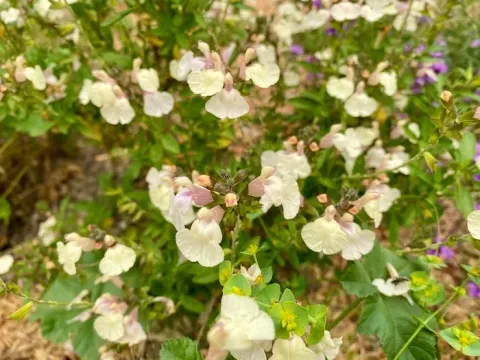
James' sage
Salvia jamensis
James' sage (Salvia jamensis) belongs to the Lamiaceae family. It is a perennial subshrub and a natural hybrid between Salvia greggii and Salvia microphylla. The plant is widely recognized for its high ornamental value and impressive adaptability to dry environmental conditions.
What the section contains
James' sage
Native to the mountainous regions of Mexico and South Texas, this species thrives in warm climates. In terms of cultivation, it requires a sunny, sheltered spot protected from heavy winds. While moderately hardy, it requires winter protection in regions where temperatures frequently drop below freezing.
Soil requirements for James' sage are specific: excellent drainage is paramount. The plant is highly susceptible to root rot if placed in heavy, waterlogged clay. It prefers light, sandy or loamy soils with a neutral to slightly alkaline pH level, mimicking its natural rocky habitat.
Botanically, it forms a bushy, branching structure, reaching 60-90 cm in height, covered in small, fragrant, ovate leaves. The flowers, appearing from late spring until the first autumn frosts, provide a wide range of colors, making it an essential choice for colorful landscape displays.
The primary use of Salvia jamensis is decorative landscaping. Due to its prolonged flowering period and drought tolerance, it is frequently used in xeriscaping, mixed flower borders, and as a filler plant in public parks and private gardens located in Mediterranean-like climates.
Fungal diseases are the primary threats to this culture, often resulting from improper irrigation or poor site selection. Excessive moisture in the root zone frequently leads to various forms of root rot, which can prove fatal to the plant if not addressed with improved drainage.
Powdery mildew represents a common foliage problem, particularly in areas with high humidity and stagnant air. Proper spacing during planting and regular pruning are essential cultural practices to improve airflow and significantly reduce the likelihood of fungal outbreaks.
Pests such as spider mites and whiteflies can be problematic during hot and dry summer months. Monitoring the underside of the leaves is critical for early detection, as these pests can rapidly sap the plant's vigor and cause yellowing or premature leaf drop.
Slugs and snails may target the succulent new growth of the plant during the spring season. Protecting the plant base with physical barriers, such as crushed stone or coarse mulch, can prevent these mollusks from reaching the stems and leaves.
General plant health and resistance to these threats are significantly improved by seasonal pruning. By removing dead or diseased wood in early spring, agronomists can ensure vigorous new growth and maintain the structural integrity and aesthetic value of the shrub.