
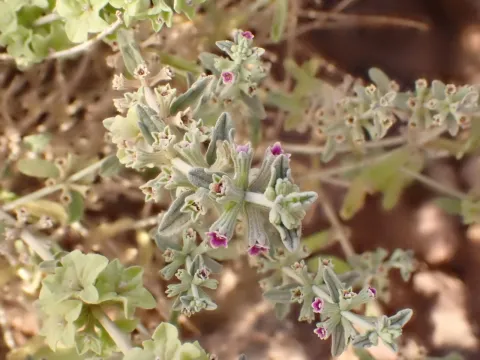
Desert horehound
Marrubium deserti
Sowing Desert Horehound typically begins in early spring once soil temperatures reach 8 to 10 degrees Celsius. The seeds are small and require a fine, well-prepared seedbed for optimal emergence.
What the section contains
Desert horehound
Seeds should be planted at a shallow depth of 1–2 centimeters. Proper soil-to-seed contact is essential to ensure consistent germination across the planting site.
Row spacing is generally set at 45–60 centimeters. This arrangement allows for mechanical weeding and ensures that each plant has enough space to develop its characteristic root structure.
Seedlings usually emerge within two to three weeks. During this early growth phase, careful weed management is necessary to prevent competition for light and nutrients.
Direct seeding is common, but in regions with harsh spring conditions, transplanting greenhouse-grown plugs can improve crop uniformity and overall field establishment.
Desert Horehound is a member of the Lamiaceae family, well-adapted to arid environments and intense sunlight. It thrives in regions where other crops might struggle due to moisture stress.
The plant prefers sandy or loamy soils with excellent drainage. It is highly intolerant of waterlogged conditions, which can lead to rapid root decay and plant mortality.
The ideal soil pH is neutral or slightly alkaline. The plant is remarkably efficient at utilizing limited soil nutrients, making it suitable for lower-fertility agricultural lands.
Temperature tolerance is a defining feature of this species. It handles high daytime temperatures exceptionally well and is adapted to the climatic conditions of desert and semi-desert areas.
Minimal irrigation is required once the plants are established. The deep taproot system allows the crop to access subsoil moisture, ensuring survival during extended dry spells.
The yield of dried foliage typically ranges between 1.5 and 2.5 tonnes per hectare, depending on local climate conditions and stand density.
Productivity is highest when the plants are harvested at the peak of their flowering phase, which is when the concentration of essential secondary metabolites is at its maximum.
Proper nutrient management, especially with potassium-based fertilizers, can enhance plant vigor and increase biomass yields over multiple years.
Integrated weed management practices significantly influence yield. Keeping the field free from aggressive weeds allows the crop to focus energy on foliage development.
Because the crop is perennial, yields can remain stable for several years, providing a reliable annual harvest with minimal additional investment after the first year.
The primary threats to Desert Horehound are fungal diseases, particularly those caused by excessive humidity, such as powdery mildew or various root rot fungi.
Aphids and mites are the most frequent insect pests. They tend to infest the plant during prolonged dry periods, attacking the tender new growth of the herb.
Field sanitation is a critical component of pest control. Removing crop debris after harvest helps to reduce the survival of pathogens and insect eggs over the winter.
Biocontrol agents and organic-approved insecticides are recommended to maintain the medicinal quality of the harvested crop, especially for the pharmaceutical market.
Proper field drainage and avoiding overcrowding are the best preventative measures against most disease-related issues that could reduce overall crop health.
Harvesting is performed during the height of the flowering period. This ensures that the essential medicinal compounds are gathered at their most potent levels.
The plants are typically mowed at a height of 5–10 centimeters above the ground, leaving the base intact to support rapid regrowth for future harvests.
Post-harvest processing involves rapid transport to a drying facility. Keeping the foliage cool and out of direct sunlight is necessary to prevent the loss of volatile oils.
Drying occurs at controlled temperatures below 40 degrees Celsius in well-ventilated areas to ensure the final product retains its structural integrity and therapeutic quality.
Once dried, the crop is cleaned, graded, and packaged for commercial use, ensuring that foreign matter and debris are strictly excluded from the final batch.