
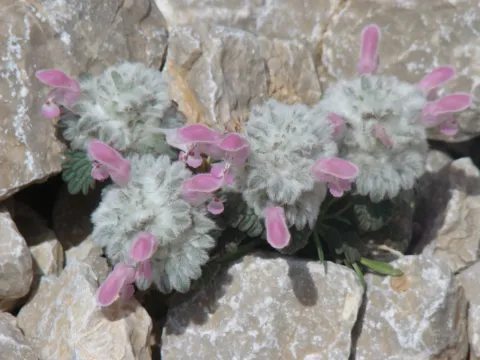
Lamium eriocephalum
Lamium eriocephalum
Lamium eriocephalum is a perennial herbaceous plant belonging to the Lamiaceae family. Cultivation typically involves starting from seeds or using vegetative division of established clusters.
What the section contains
Lamium eriocephalum
Seeds should be sown in a light, well-draining substrate during early spring or autumn. Providing adequate moisture and gentle warmth is essential for successful germination.
When propagating through division, it is best to separate the clumps during the plant's dormant period or early in the growing season to ensure quick establishment.
The planting depth for seeds should be shallow, as they require some light exposure to trigger the germination process effectively.
To achieve optimal aesthetic coverage in landscape design, plants are generally spaced 20 to 30 centimeters apart, allowing them to spread naturally over time.
This species thrives in well-draining soils with a neutral to slightly alkaline pH. It is crucial to ensure that the site does not retain excess water during winter.
While the plant can tolerate various environmental conditions, it performs best in semi-shaded areas, mimicking its natural habitat in rocky mountain regions.
Regular but moderate watering is required during the active growth period, though mature plants demonstrate good drought tolerance once established.
Application of balanced fertilizers in early spring helps support vigorous foliage development and sustains the overall health of the plant throughout the season.
Maintaining clear space around the base of the plant is recommended to prevent excessive competition from surrounding weeds that could hinder growth.
The primary concern for Lamium eriocephalum is root rot, usually caused by poorly drained soil or excessive moisture accumulation during cold weather.
Powdery mildew may occur on the leaves if humidity levels remain high and air circulation is insufficient, necessitating immediate removal of affected foliage.
Slugs and snails are common pests that may feed on the tender leaves, particularly during cool, damp spring weather, requiring protective measures if needed.
Proper spacing and site selection are the best preventive strategies against most biological threats, as they promote better overall plant vigor.
If chemical or biological control is necessary, products must be selected carefully to ensure they do not harm the beneficial pollinating insects visiting the plant.
The primary agricultural and horticultural utility of Lamium eriocephalum lies in its use as a resilient ground cover for rock gardens and borders.
The plant serves as a significant source of nectar for early-season pollinators, contributing positively to the ecosystem of garden environments.
When collecting seeds for further propagation, stems should be harvested once the seed capsules show signs of maturity and then air-dried indoors.
Pruning is recommended after the flowering cycle is complete to remove spent stalks and encourage the growth of fresh, vibrant foliage for the remainder of the season.
Because of its ornamental value and ease of maintenance, it is highly sought after for creating low-maintenance green spaces in temperate climate zones.