
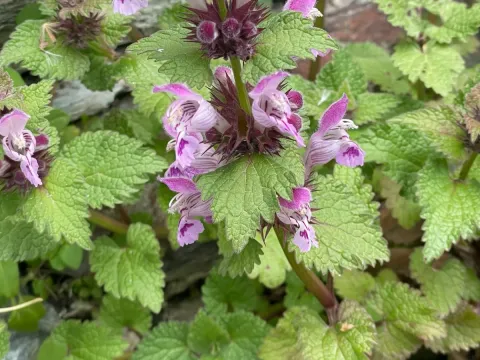
Gargano deadnettle
Lamium garganicum
The Gargano deadnettle (Lamium garganicum) is a robust perennial herb belonging to the Lamiaceae family. Originally native to the Mediterranean region and parts of Western Asia, it thrives in rocky woodland habitats and sheltered mountain slopes.
What the section contains
Gargano deadnettle
Botanically, the plant is characterized by its distinct square stems and opposite, heart-shaped leaves that often exhibit a soft, downy texture. The inflorescences are typically showy, featuring tubular, two-lipped flowers ranging from pink to purple, which bloom in the spring and early summer.
Regarding climatic requirements, the plant prefers temperate conditions with moderate humidity. While it is quite adaptable, it performs best in partial shade, mimicking its natural forest-floor environment where it is protected from harsh midday sun and drying winds.
For optimal growth, the soil should be rich in organic matter, slightly alkaline, and provide excellent drainage. Water management is key; the plant requires consistent moisture during the growing season but is susceptible to root rot if the soil remains waterlogged for extended periods.
Economically, this species is highly valued in horticulture as a reliable ground-covering plant that suppresses weeds and provides aesthetic value. Additionally, its nectar-rich flowers make it an essential forage source for various bee species, supporting local biodiversity in gardens and managed landscapes.
The primary pathological threats include fungal infections such as powdery mildew, which often occur in high-humidity settings with poor ventilation. To prevent this, spacing plants appropriately and ensuring good airflow between them is a standard and effective horticultural practice.
Pest pressures are generally manageable but can include slugs and snails, which are attracted to the succulent-like leaves of the plant. Integrated pest management, including physical barriers or eco-friendly deterrents, is recommended to protect the integrity of the foliage.