
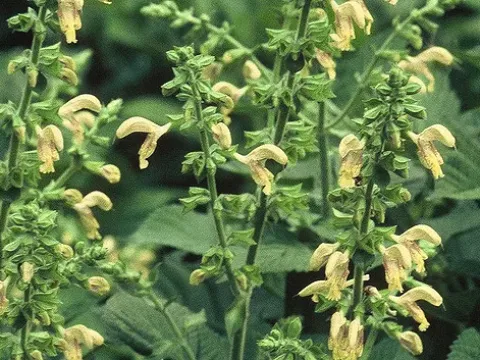
Koyama's Sage
Salvia koyamae
Koyama's Sage (Salvia koyamae) is a perennial herbaceous plant belonging to the Lamiaceae family. This species is native to the woodland areas of Japan, which has adapted it to thrive in shaded environments, unlike most sun-loving members of the genus Salvia.
What the section contains
Koyama's Sage
The plant prefers rich, moist, and well-drained soil that mimics the forest floor environment. It is an excellent choice for woodland gardens, where its broad, heart-shaped leaves provide a lush texture during the growing season.
In terms of climate, Salvia koyamae performs best in temperate zones with moderate humidity levels. While it is reasonably hardy, providing a layer of mulch in colder regions helps protect the root system from extreme temperature fluctuations during the dormant winter period.
Botanical highlights include its unique yellow flowers, which appear on terminal spikes in late summer and early autumn. This late bloom period makes the plant particularly valuable for extending the interest of a garden long after most summer flowers have faded.
Cultivation requires careful site selection, ensuring the plant is shielded from intense midday sun, which can scorch the foliage. Adequate spacing is also necessary to maintain the plant's health and to ensure it has enough room for its horizontal growth habit.
The primary threats to Salvia koyamae are fungal issues related to poor soil drainage and stagnant air. Overwatering or heavy clay soils can lead to root rot, which is often fatal if not addressed by improving the soil structure with organic amendments.
Slugs and snails are the most common pests, as they are attracted to the soft, large foliage of the sage. These pests can rapidly defoliate the plant if protective measures are not implemented during the early stages of spring growth.
To mitigate the risk of pest damage, gardeners should maintain a debris-free zone around the base of the plant. Barriers such as copper tape or crushed eggshells can be effective in preventing mollusks from reaching the sensitive leaves.
Good cultural practices, such as morning watering and avoiding overhead irrigation, significantly reduce the incidence of powdery mildew and leaf spots. Proper ventilation is essential for preventing the buildup of humidity that favors fungal growth.
Integrated pest management involves regular monitoring of the underside of the leaves, where pests often congregate. Early intervention is the key to maintaining a healthy and aesthetically pleasing display throughout the entire growing season.